Tag: Children

  • Short Story Review: “Stories” by Annie Ernaux

    (The short story “Stories” by Annie Ernaux, which was translated from the French by Alison L. Strayer, appeared in the June 8th, 2026 issue of The New Yorker.)

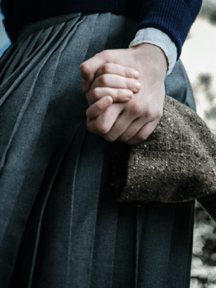
    Photograph by Jet Swan for The New Yorker

    You know what I like most about Annie Ernaux’s “Stories”? Well, besides the language, and tone, and ethereal feeling of the loss of a past childhood, or how it feels innocent and menacing at the same time, or the power of words and storytelling, or how the protagonist/narrator doesn’t seem to be a very nice person because she sort of traumatizes a five-year-old. No, my appreciation for this story began to form when I finished reading it, as I was left wondering how fictional was this piece? I know full well that the overwhelming majority of Ernaux’s work is autobiographical, but I was still left wondering, to what degree is this fictional, or factual? For the sake of writing this, I’m going to come down on the side of fiction, as it is in the “Fiction” issue of The New Yorker, but I feel that for this story to work on all levels, Ernaux needs us the believe that this really happened. And not a portion of it; all of it. Even though I am sure this story is based on an event which has been fictionalized.

    See, it’s that last paragraph which might well be the best, and correctly used version of the “Dead chick in the basket” trick. (To explain, “Dead Chick in the Basket” refers to a writing device where the final paragraph of a short story contains new information about a character which is meant to make the reader view the actions, statements, or feelings of that character in a different light. This device was effectively used in J.D. Salinger’s short story “Just Before the War with the Eskimos,” where the name of the device comes from.) We go through this whole story, and then are given this last paragraph which seems to explain that this is all real. Or is it? She is a character in her own story? She wrote this to understand herself, but ended up writing another story? (You know, this just might be an unreliable narrator.)

    I will die on this hill of a fictional interpretation, because wasn’t Ernaux trying to tell us in this story that she discovered she had the ability to create a fiction so powerful that the audience accepted it as reality and had an honest emotional reaction to it? It’s like it’s meta on meta on meta. And we will never figure out what the truth is because only Ernaux knows that.

  • What It’s Like To Be a Stay-at-Home-Dad? (“Mommy Has Questions” Podcast Interview)

    Here is the episode of the podcast Mommy Has Questions that I was interviewed on. It was a fun conversation about stay at home parenting, male roles in the family, and the couple of other things. I had great time, enjoyed the discussion, and the whole Mommy Has Questions team made me feel comfortable and right at home. So thank you for having me.

    Please, give it a listen – follow, subscribe, leave a comment. You know the drill.

  • Short Story Review: “13.1 Septillion Pounds” by Emily Rinkema

    Short Story Review: “13.1 Septillion Pounds” by Emily Rinkema

    (The short story “13.1 Septillion Pounds” by Emily Rinkema appeared on September 19th, 2025 at Okay Donkey.)

    Image from Okay Donkey

    I like being a dad. Fatherhood has been more rewarding than I imagined. And I will also say that parenting is harder than I thought possible because unforeseen changes seem to happen every three months. Just when I think I got it down, life with the kid takes a right turn. Though me and the wife had plans and best intentions, we learned that we weren’t in control. Reading Emily Rinkema’s cute and humorous “13.1 Septillion Pounds,” I was reminded of all of those emotions, especially when our kid was still a squirmy baby.

    The premise of the story is that two parents go to wake their baby only to find that the child has written math formulas and equations on the walls the night before. The math is accurate, as two mathematicians arrive and verify. I feared this setup was going to lead to a one-note joke; kid does something crazy therefore the parents have a crazy reaction.

    I needn’t have worried.

    What the story is playing on is the unintended consequences of the parents’ well intended actions. Perhaps the Grandma was correct and the child is just gifted, and this situation would have come about inevitably. Or, maybe it was the mobile displaying the galaxy that influenced the baby? Clearly the basketball that the father left in the crib helped the child formulate the weight of Earth. Though I’m not sure I know a parent that would leave a Sharpie in their child’s crib, but hey, I can let that one go. The truth, and the humor for that matter, of this story lies in an honest fear and hope that parents have; they hope their children will do better than them, but fear that in succeeding the child will become someone they won’t understand.

    The conclusion that the parents reach is correct, and one which makes the world right again. It is wholesome, right and honest, all the things that I hope parenting is. Most of the time, I have no idea what I am doing as a father. It’s a scary tough job. But being able to help my kid become who they are is a deep and profound privilege. It’s just a really bumpy ride that loves to make a bunch of turns.

  • Short Non-Fiction Review: “They Only Come Out at Night” by Kara Melissa

    (The short non-fiction piece “They Only Come Out at Night” by Kara Melissa was presented by Rejection Letters on September 10th, 2025.)

    Image by Janvi Bhardwaj

    I had the hardest time coming up with a solid opening paragraph for this review of Kara Melissa’s non-fiction piece “They Only Come Out at Night.” I like to think that I’m good at introductions, but not this time. The issue I am having is how I can’t wrap my arms around this essay to find one single starting point to explain how this honest, interwoven, melancholic story affected me.

    From the first paragraph, Melissa pulled me in with an intense honesty; confidant in its story telling. Not for shock value, nor did this feel like oversharing, or a performative confession. This was a clear declaration of deep emotions, fully self-aware that maybe some people wouldn’t understand this situation, but it was true.

    What follows are three tangents, platted together with connecting themes of MRI’s, hospitals, logic, brain function, and most importantly love; the compassion, empathy and longings which form in situations Melissa finds herself in. Through all of it, I felt this wrap of a happy melancholy resignation to it all. I wish I could explain that better, but it’s what I feel someone who has loved deeply, and lost greatly would feel towards the world.

    I relished how the essay is presented straight forward and logical – The descriptions of medical treatments, aliments, and the causes. The setting is during the Covid lockdowns, and with the clinical narrative, Melissa creates a feeling of isolation and detachment. This makes her desire for connection, understanding, and compassion all the more pertinent.

    I don’t want to belabor this review, as I am purposefully not going into all the details of the essay, because you should go read it. But I will say that the last section left me with a wonderful feeling of hopefulness. That even in the darkness, when we feel lost, that the love we have for each other can carry us through. With everything going on, I needed to be reminded of that fact.

  • Reality of Homework

    So, the kid has started middle school, and new things have been thrown at her from her school, and on the whole, she has handled all of these changes admirably.

    With the exception of homework.

    Now, I am NOT here to say that her school has given her too much work, or any of that stuff. No, I believe that her school is rolling out homework at a respectable pace.

    It’s just that the kid doesn’t like doing homework, because she’d rather be talking to her friends, or playing online games. You know…

    And this isn’t like the first time that the kid has had homework. Even in her elementary school, she was required to read for thirty minutes a night, and do a page of math problems. If things were very hectic, she might also have a little science homework as well. Tops, all of this work would take her an hour. Most nights, she was done in forty minutes, and with only a minor amount of grumbling. Middle school homework takes about an hour.

    As we have been dealing with this new found disgust of homework, it reminded me of when she first got “homework” back in second grade. It was like five math problems that she could do at home, and she was excited to take care of it first thing after school. I get, because I remember doing the same thing at her age.

    For me, not that I 100% remember what my “homework” was, let’s say math, but it was the fact that I felt like I was older, doing ready studying, really learning. Home work was that thing my older brothers had to do, and it must be a good thing because they were smarter than me, so homework made you smarter. And I wanted to be smarter. What I do remember concretely was the feeling of accomplishment for completing whatever that homework was, and also how my brothers told me I shouldn’t be excited to get homework because it was like a punishment.

    Clearly things changed, and I also remember the awful years in junior high, with so much homework, and feeling like it was looming over my life. I don’t remember that feeling in high school, though I know there was an enormous amount of homework. College was college, and studying and homework was just part of the deal – no point in complaining about it, but, again, it never felt soul crushing like junior high.

    Either way, life has come full circle, and the kid hates the amount of homework she has; no matter the size of work. I guess this is a lesson she has to learn – get your work done so you can do the stuff you want to do.

    Something like that.