Tag: Fathers

  • Short Story Review: “A Very Safe Place” by Rachel Heng

    (The short story “A Very Safe Place” by Rachel Heng appeared in the October 12th, 2026 Issue of The New Yorker.)
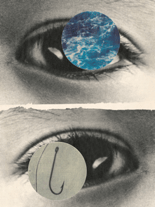
    (Illustration by Vanessa Saba; Source photographs from Getty)

    Rachel Heng’s “A Very Safe Place” is a timely story. Set in Singapore, it confronts the complicated situation of immigration; Its motivations, what constitutes doing the right thing, and the threat of punishment. It also is about a child coming to see the world for what it is, and how disappointing and confusing that can be. All of these are themes and ideas that I applaud in a story – especially one that aims to be as realistic as possible. There is no happy ending here, or nice bow that will wrap everything together. Though sober and stark in its writing, it’s an honesty that is needed when speaking on this subject.

    The story left me feeling melancholic, like there was a dark cloud hanging over all of it. Another way to describe it, is that this story is colored in black in white. Not in a moralistic simplicity, but more for the starkness and complexity of these issues presented. (Like how a black and white movie seems more realistic than color.) The good father who has to make a difficult decision for the safety of his family, a mother whose rigidness keeps her family protected, an immigrant striving for a better life, and a boy slowly coming to understand that the world is filled with complications that aren’t easy to square.

    But, unfortunately, that melancholic started to veer into joylessness as the story neared its end, which made this average length story feel like a trudge. My mind did wander and wonder when this was going to wrap up? That was due to the story playing at one dramatic note of seriousness, with nothing to break the tension, or even to play with fluctuating the tone.

    In the end, “A Very Safe Place” is another good story from Rachel Heng. Where it succeeds most is showing how the boy discovers the larger world he now lives in. Hopefully, this encounter will lead him to a life filled with empathy and compassion, regardless of the consequences.


  • Short Story Review: “The Dreamdrive” by Weike Wang

    (The short story “The Dreamdrive” by Weike Wang appeared in the May 25th, 2026 issue of The New Yorker.)

    Illustration by Chris Harnan

    Reading “The Dreamdrive” was like watching my favorite basketball player miss an unobstructed layup.

    First, there was the tone of the piece, which was attempting to be lighter, easy, and humorous. The effect of this was that the story never achieved a depth. Everything was presented at arm’s length, making the story feel like nothing was at risk, or truly important. Also, in an attempt at humor, one character was described as “his then girlfriend,” implying her eventual fate. This cliched trick of description can work if it is partnered with irony, but in this setting, the attempt was to humorously build sympathy for our sad sack of a protagonist. Unfortunately, I did not see the reason why we needed to have this information presented in such a manner.

    Second, the revelation of the dream fell out of the sky and crashed like dishes on the floor. It was as if the narrator decided that the story needed to end now, and we were quickly given the relevance of what had been happening. But without any foreshadowing, or even a climatic build up, the revelation doesn’t achieve any resonance. Such as, now that the protagonist understands where his reoccurring dream is coming from, how does that help him move forward? It’s implied that he can sleep again, but is there nothing deeper here? How is the hero changed, other than being able to sleep? It felt to me that an emotional plot point was missing.

    Third, with the tone and lack of resonance in this story, it made the narrator sound condescending to the protagonist. The narrator treats the protagonist as a person to ridicule and kick around. Multiple times the hero is shown as a person no one takes seriously. And honestly, if the narrator doesn’t care about the protagonist, then why should the reader?

  • Short Story Review: “Rate Your Happiness” by Catherine Lacey

    (The short story “Rate Your Happiness” by Catherine Lacey appeared in the April 13th, 2026 issue of The New Yorker.)

    Photograph by Tobias Nicolai

    When I finished reading Catherine Lacey’s “Rate Your Happiness” I was reminded of driving a car with a manual transmission. Especially when you don’t put the car in gear and still step on the gas which causes the engine to rev really high, but you don’t go anywhere. In this story, the narrator calls this “meaningless motion” and they’re right. And it’s also very frustrating.

    I understand that the theme of this story was existing in atrophy, and motion that leads to nowhere. Unfortunately, having a protagonist that doesn’t make a decision or choice leaves the ending of the story empty and unsatisfying. There is one sentence in the last paragraph which I think attempts to bring about a conclusion: “Louise returned to the street with real intent, finally carrying her contradictory desires with total clarity…” but I have to say that this sentence is being asking to do a whole lot of heavy lifting for this story. It implies that Louise has made a choice to accept who she is when it comes to how she has reacted to the situations the story has presented. Yet, is it truly a choice when the character is only acknowledging that they don’t make choices? Though an interesting philosophical question, it doesn’t work narratively.

    What “Rate Your Happiness” presents is something that feels akin to the first one or two chapters of a novel. There are a lot of moving parts here, and Lacy does a good job of balancing them in the narrative. No one idea, theme, or character dominates, and it all flows and ripples over each other creating the feeling of a very real and complicated character in the protagonist of Louise. In fact, I enjoyed all the characters that were presented in this story, and wanted to see and hear more from them.

    Like I said, if this was the first chapter of a novel, I’m hooked and I want to see how this plays out. As a short story, the engine is revving up, but we didn’t go anywhere.

  • ODDS and ENDS: Stressful, Blue to White, and I Gotta Run

    ODDS and ENDS: Stressful, Blue to White, and I Gotta Run

    (I will sing, sing my song…)

    Man in blue tracksuit frantically running out of the Sakura Heights apartment building door.
    Word Press’ AI creates some awful images, huh?

    You know the one thing in my life that I had no idea would be stressful; Planning a kid’s birthday party. I thought planning our wedding was bad. I had no idea that birthday parties for 10 ten year old girls causes me to lose sleep at night. I wake up in a cold sweat scared that I have forgotten some detail. My stomach churns at the idea a kid will come to the party and not have a good time, or will be excluded for whatever stupid reason, and then it is my responsibility to make sure EVERYONE HAS A GOOD TIME! Seriously, there should be a list for new parents of all the shit that will stress you out that you have no idea on God-s Green Earth are stressful. Making memories here…

    So, it seems my default colors right now is white and blue. I say all of this because as I start to “Spring Clean” and de-clutter my closet, I’m tossing shirts which are old, and have holes in them. What I am left with is an amazing spectrum of blue to white, all in an Oxford style. I have written a couple of times, how in my middle age period, I have taken on a Classic American/Oxford/New England/Ivy League look. It feels comfortable, defined, and at the same time casual on me. The draw back here is that I seem to have boxed myself in color wise. I do have some Nantucket Red pants, but really, I seem to have dropped the ball on having a splash of color in my life.

    Ah… It’s almost 11am, and I need to run to the grocery store. It’s a busy day and I have a lot to do.

  • Spring Break Broke Me (Unedited)

    I take full responsibility for my actions. Let’s start with that.

    The kid has been on her Spring Break for the past week, and on the whole, I have enjoyed the time we have spent together. The older she gets, the more fun she is to talk to. She very smart and a very opinionated kid, which makes conversations with her enjoyable because she is very passionate in what she believes in. She’s at a fun age when the world is brand new and just waiting for her to explore it. I didn’t try to over schedule her, but we did some fun stuff like spend an afternoon at the Whitney Museum, and we shot some arrows over at Gotham Archery in Brooklyn.

    But I did make a mistake with this Spring Break; I fell out of my routine. This was the kid’s Spring Break, not mine. For some reason, I got it in my head that I was also going to enjoy some “time off.” Unfortunately, this was a miscalculation, as you see, when you are a stay at home parent, you never really get a day off. Your job is to keep the family on track and moving forward. This I lost sight of.

    What I ended up creating in myself was a feeling of anxiety, and the sense that I was letting “everything” fall behind. Everything was taking longer to do, and thus created situations where I wasn’t able to complete the tasks that were important to me; mainly writing and catching up on my reading. But if I took time for myself, then I started feeling guilty, and then those feelings rolled up into a ball angst, as I wasn’t doing enough for my family.

    I chalk this up on bad planning, and too high of aspirations, on my part.