Tag: Writing

  • Short Story Review: “Ambrose” by Allegra Goodman

    (The short story “Ambrose” by Allegra Goodman appeared in the September 30th, 2024 issue of The New Yorker.)

    Photograph by Annie Collinge for The New Yorker

    I’m paraphrasing this, but John Lennon said the best way to become a good song writer, is that you first have to write a lot of bad songs. I think that applies to any artist; to make good art, you have to make a whole lot of bad art first. That doesn’t mean that the bad art only serves the purpose of getting the artist to their good art. No, bad art can help in so many ways. That was one of the thoughts that went through my head while reading “Ambrose” by Allegra Goodman’s effectively touching story.

    Here’s a way too short synopsis: Lily is a sixth grader who is writing a story, about the Princess Ambrose, while also dealing with the difficulties of her parent’s divorce. Elements of Lily’s life work their way into the world of Princess Ambrose.

    What Goodman’s story just smashes are the little details. The way Lily decorates her notebook that contains the story, her parents concern, the words and phrases used by grownups talking about kids, and the way Lily sees her parents sitting together when they haven’t in a long time. I appreciated how Goodman approached Lily’s struggles by never belittling them, and though the school might have over reacted, the adults in Lily’s life take her seriously. But my favorite aspect was that Lily’s story wasn’t particularly good, in regard to originality or grammar. Lily creating a “good story” really isn’t the point so much as Lily discovering, maybe subconsciously, that the issues of her life can be expressed and dealt with in the art she is creating. I felt that was a very honest and authentic way to dramatize the creation of this writer, showing us how important it is that she writes this story, even though it isn’t very good. I think lesser writers would have made Lily’s story epic, and original and well written… and that would have missed the point.

    My only criticism of the story is the ending. Not the climax, which was handled very well. No, I’m talking about the last nine paragraphs. After giving us a nice honest moment between Lily and her mother, the final scene is in Lily’s dance class with an odd fitting “deus ex machina” of a substitute dance teacher. This felt tagged on, as if to give Lily a win in the story, or to end on a button. I found it distracting because the story was taking us to a place where Lily, and her parents, are all learning that this life together will be difficult, but they will face it as a family. Just didn’t sit right with me.

    That’s not to say that I’m not recommending this story. “Ambrose” is sweet, and moves with an airy confidence that is charming. Goodman makes Lily a very interesting, and intelligent kid who is going through a time in her life which makes everything a challenge. This isn’t life and death drama, but Goodman shows how impactful moments in a six grader’s life can be.

  • Short Story Review: “Autobahn” by Hugo Hamilton

    (The short story “Autobahn” by Hugo Hamilton appeared in the September 23rd, 2024 issue of The New Yorker.)

    Illustration by Christoph Niemann

    Funny how a situation, a moment that you are experiencing, can unlock a memory that even sometimes has nothing to do with what you are doing. Walking into my kid’s school the other day, I started to remember being at my grandmother’s house, and how it would smell when she was making apple dumplings. Interesting, how moments in our lives can be keys to the past. Hugo Hamilton’s “Autobahn” plays around with that idea, but in a more dramatic fashion.

    Here’s a super simple description of the story: The narrator, an Irish hitchhiker in Germany, is questioned at gun point by a police officer along the Autobahn, and while being held there, the narrator begins to remember his father.

    This is a very short story, and though it isn’t a flash piece, it had that quality to it. Also, this story did remind me of a song, perhaps because there were two “melodies” happening with the piece; the cop story line, and the father story line. (And then it could be that the story ends mentioning a Doors’ song.) I found that Hamilton did a good job switching between these two narratives, like jumping from the chorus to the bridge, and then back again. Both story lines had the threat of violence to them, which created tension needed to keep the story dramatic, yet I couldn’t shake the feeling that the narrator was never really in danger.

    What I found most interesting about “Autobahn” were two bits; one was the theme, and the other was the climax. I liked how Hamilton laid out the difficult and conflicting the relationship was between the narrator and his father. How the father could be abusive toward his son, but also encourage his son’s talents, and how circling that square is a never-ending challenge which ends up making memories of the father always close to the surface. Then there was the climax, where the narrator describes a moment when he saw his father at a newsstand, but his father didn’t see him. It was drawn well, and had a lasting but fleeting feeling to it.

    I liked this story, though it did feel light. Like, the story wanted to go to a third gear, so the speak, but pulled back in the last section. Over all, Hugo Hamilton created a very specific emotional moment, that I could relate to, as sometimes you can’t stop a memory from coming up.

  • That’s One Sick Kid

    If you are not aware, besides being a theatre artist and a writer and a sketchbook enthusiasts, I am also a stay at home parent. I like to see how many hats I can put on over the course of a day, as every day is a balancing act. I make time for my family and try to take time for myself.

    But all of it will come to a crashing halt when the kid gets sick, which happened this morning. She woke up groggy and not hungry, which were yellow flags that something was up. And then there was a cough, followed by her repeating to us that she felt warm. Ahh… the final red flag.

    I took her temperature and immediately thought of how when everyone is a kid, they think they can force their body to have a fever to get out of school. Too my sad surprise, the kid actually had a fever. Holy Crap! It’s just the second week of school; is that even possible?

    The answer is yes. And as the day has gone on, the fever has slowly crept up. Nothing scary, but it went from 99 to now resting at 100. Tylenol and Gatorade be damned! Nothing will kill this bug!

    What was I planning on doing today?

    Doesn’t matter. This is a day of toast making and YouTube watching. Reading stories, and playing games.

    The writing I wanted to do today? Ha! Dream on, sir! There is a little girl that needs her dad.

    And deep down, I know I’d rather take care of the kid than do anything else.

    Even though I might pitch a story idea to a comedy blog, and write a couple of short story reviews.

    Who am I kidding? I’m going to let the kid paint my nails.

  • Weird

    Funny how one well placed word can unravel a person. The right word, said at the right time can cut to the core of someone, revealing what they fear most. And once that word is out there, being applied to that person, no matter how they try to defend or deflect, that word sticks to them.

    And “weird” was that word yesterday – just slicing through so much MAGA bravado, and leaving grasping Alpha Men with nothing to say except, basically, “I’m not weird! You’re weird!” But it was too late, damage was done.

    And the “weird” label hit MAGA Men at their most vulnerable spot – questioning if their world view was actually normal. The MAGA reaction says to me that most of them, MAGA Alpha Bros that is, know deep down what they are saying and believing in, is abnormal, if not outright weird. I can hear them thinking; “The shit that Trump says; it is weird.” “Maybe I am the weird one, but not in the outsider who’s cool kind’a weird; just the bad weird.”

    What I find most ironic is that this used to be a Trump skill. You know, he’d find that one word that encapsulates his opponent; “Lying” “Sleepy” “Cheating” “Meatball” “Little.” I hate to admit it, but Trump was really good at it. He would throw out a name, it would stick, and no matter how hard they try, that label stuck, and Trump would repeat it, over and over and over and over…

    So, the tables have turned. The bullies are being bullied by words. Poetic justice is just the tip of the cliches I can use here.

    I doubt that “weird” will live beyond this week’s news cycle.

    But it has been fun to watch.

  • Bisy Backson

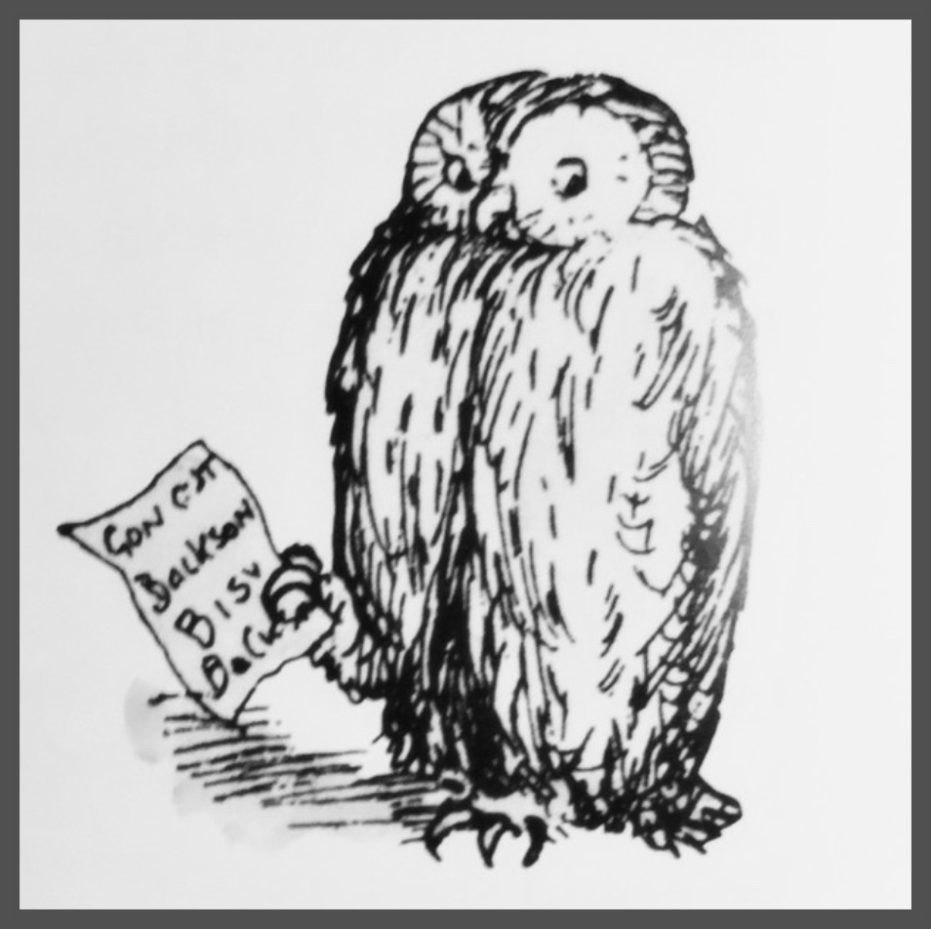
    Gon Out Backson Bisy Backson

    It’s just one of those days