Tag: The New Yorker

  • Short Story Review: “Five Bridges” by Colm Tóibín

    (The short story “Five Bridges” by Colm Tóibín appeared in the March 10th, 2025 issue of The New Yorker.)

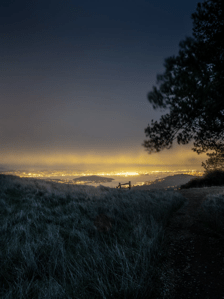
    Photograph by Todd Hido for The New Yorker

    Sometimes when I start reading a short story, in the back of my mind, I start rooting for it. You know, cheering it on, hoping that the story succeeds. Like wishing that your favorite ballplayer hits a homerun when they’re at the plate. So you see, I found myself really pulling for Colm Tóibín’s “Five Bridges” to do well, and accomplish its goals.

    Here’s an overly simplified synopsis: Paul, an Irish guy who has been living in the United States illegally for over thirty years, has decided to move back to Ireland, but in so doing, that will mean he will have to leave his daughter, whom he fathered with woman he never married. But before he leaves, his daughter wants Paul, the mother and the mother’s husband, to all hike Mount Tam which is outside of San Francisco.

    It all starts well. The first section is about Paul hiking with his daughter, Geraldine, and then she tells him her idea about everyone hiking together to Mount Tam. Then at a very leisurely pace, we learn about the strained relationship Paul has with Geraldine’s mother, Sandra. We learn about Paul’s profession as an unlicensed plumber, his socks filled with cash, and his recovery over his alcoholism. Then the story takes a rather hard right turn with the introduction of Paul’s friend Kirwan, another Irishman, and the semi support group Kirwan creates for other single Irishmen living in the Bay Area. Then the story shifts back to Paul, Geraldine, Sandra and her husband, Stan, as the hike up the mount. I’ll leave it there as to not ruin the ending.

    As you can see, Tóibín layers his story, and generally it all works together smoothly, with the exception of that hard-right turn with Kirwan. Also, several themes play under the surface here; fathers and daughters, blended families, immigration, culture clashes, redemption, penance… And as the story went on, and I got closer and closer to the final page, that’s when I started hoping and rooting for this story to all pull together.

    I was enjoying what I was reading, but I couldn’t shake the feeling that nothing was getting it’s full due time to resolve itself. When I encounter stories that feel like this, it’s hard for me to shake the feeling that the piece needs a larger format (a novel) to explore the characters, motivations and themes. I wouldn’t go as far to say I was disappointed with the story; more like I was pulling for it, and wanted to it work.

  • ODDS and ENDS: Boycott, Data, and the WAPO

    (Nothing really matters…)

    Today is the Economic Blackout, if you haven’t heard, and our household is taking part in it. Yesterday, I ran all around town and did all of our shopping, and even gassed up the car, just in case. It can be rather tough to not spend money in New York, as it feels like you spend $20 the second you step outside of your apartment. I am confident in the reasons we are doing this (corporate greed, wealth inequality, oligarchs, inflation, Elon, Trump…) and I also know that other people have their reasons as well. I also know that many people out there think that doing something like this is meaningless and more theatrics than action. But, I will say this; if you are upset with how things are going, then it’s time to do something, even a “little” something. I won’t sit on my hands any longer waiting for someone else to say or doing something. What’s the saying? If you want change, you have to make the change.

    And as long as we are talking about boycotts; when will there be a boycott against the largest greediest companies in America? Talking about Meta, Apple and Google. (I would think the Economic Blackout would affect Amazon, but what the hell, we can throw them in as well.) Do we need to stop using our phones and computers for a day? Delete their apps? How do we stop these companies from getting what they really want from us; our data. What does a data boycott look like?

    And finally, I’d like to take a swing at the Washington Post while I’m at it. This morning I received an email from the editors at The Drift with an essay written by James Woods, the staff writer and book critic at The New Yorker and not that other James Woods. The email/essay delved into the stupidity of Jeff Bezos’ letter announcing the change in policy to The Washington Post’s editorial page. Long story short, Bezos is ordering that there will only be one opinion on the WAPO Opinion Page, which will be to support Personal Liberty and Free Markets. Woods’ does an excellent job in pointing out the hypocrisy and illogic in Bezos statement, and to me, signals the end of what The Washington Post used to stand for under Graham/Bradlee. (I would post a link to the essay, but it seems to only be an email at this time. If a link becomes available, I’ll share it.) With all of that having been said, I have a fantastical idea! Bezos bought the Post for $250 million, which is roughly what Elon spent to get Trump elected, so what if all the liberal billionaires, and all the other billionaires who hate Bezos, pooled some money together, say $250 million, and started a new newspaper in D.C. Then hire the whole WAPO staff away, and leave Jeff with a worthless company. Right? Isn’t that the only way to fight the oligarchy, is with the oligarchy?

  • Short Story Review: “Keuka Lake” by Joseph O’Neill

    (The short story “Keuka Lake” by Joseph O’Neill appeared in the March 3rd, 2025 issue of The New Yorker.)

    Photograph by Annie Collinge for The New Yorker

    I don’t know if you know this, but grief is a really popular theme for short stories. (That and bad relationships with parents, but that’s a story for another day.) Grief lends itself easily to the dramatic, and is also individualistic, and it can also be shocking as to what emotions and memories it will bring up. Everyone grieves differently, and maybe I was a little flippant at the start of this, because maybe my past grief still makes me uncomfortable.  Parts of “Keuka Lake” tapped on my past grief, but in the end Joseph O’Neill’s story meandered, leaving an unsteady feeling to the work.

    The story starts off with a banger of a first paragraph, letting us know that Nadia, the protagonist, has been involved with someone from a teenager to the day she became a widower at fifty-four. Her husband was killed in a car crash near a town in the Finger Lakes, and Nadia never knew why her husband was driving up there. And then the story just flutters about. We follow Nadia to a visit to her sister on Montreal, and then an early return to the States, where she gets a speeding ticket. She then looks up a former boyfriend, who is a lawyer, to take care of the ticket, and though she never sees the lawyer, Nadia engages his secretary to look into the reasons why her husband was in the Finger Lakes.

    I say that the story “meanders” and “flutters” because the story never feels like it takes anyone seriously. The tone that is taken towards everyone that isn’t Nadia is condescending and rather dismissive. I understand that Nadia is lost without her husband, and she isn’t sure how to react or behave normally, as everything has a level of annoyance to her. But at the end of the story, I can’t say conclusively that Nadia learned anything. There is no catharsis, or release, or even a realization of anything. I believe the last section of the story was to provide that, but it felt too random and disjointed, though I understood that Keuka Lake is near the town where Nadia’s husband was killed, and I guess we are all the fish in our grief.

  • Best of 2024: Best Post of the Year – Short Story Review: “That Girl” by Addie Citchens

    (“That Girl” was the best story I read all of 2024; Hands down, no question. I am putting it up here, not for my feeble attempt at writing a review over it, but because I still think it’s an amazing story and you should read it.)

    (The short story “That Girl” by Addie Citchens appeared in the February 12th and 19th, 2024 issue of The New Yorker.)

    Illustration by Derek Abella

    Oh, it’s so much fun reading something that reminds you how powerful a short story can be. In a very deft, strong, subtle and powerful voice, Addie Citchens presents a complex and compelling narrative, as well as a fascinating character in Theo. “That Girl” is the type of story that, at the same time, inspires me to keep writing, and also reminds me how high that bar is to create something inspiring.

    I could say that this is a story about first love, but that description would be disservice to all the elements and themes in this story. Maybe not love, but it is about the discovery of passion and desire where it never existed before. Of kindness, and menace, and doing something that’s been deemed wrong but at the same time awakens the knowledge of the larger world around you, and how could that be wrong?

    Citchens’ takes us on Theo’s journey, which begins during her summer before she goes into ninth grade. One hot day she meets Shirlee, an older girl who should be going into eleventh grade but is still in ninth. This first section perfectly works at setting up the whole story, showing the desire, motivations, and direction of the characters. And the world these characters occupy is a place where violence is always just below the surface, and these girls are aware of it, and how powerless it can make them. It is easy to understand how and why Theo finds Shirlee’s kindness and understanding so intoxicating, especially for a girl who feels isolated in her loneliness.

    As I have been thinking about this story, and there are so many things to talk about, but I have been marveling at Citchens’ language, and her structuring of this story. Reading the piece, I never felt like a word was wasted. The language was pared down to the most essential and powerful. I was on Theo’s journey, and it would take time, but never did I feel like my time was wasted. (I can’t explain it, but I felt like Citchens respected the reader more than any writer I have read in a very long time.) And the structure of the story was in the mold of the “hero’s journey” but never for a second did it feel contrived or predictable. This was a brutal, at times, but honest journey that laid out it’s points so well, that when the story concluded, I knew the choice that Theo had to make, but I was still left heartbroken for her.

    And there are layers and layers to this story. I haven’t touched on half of them; mother’s and daughter, religion, sexual assault, growth and confidence, generational abuse… But also love, compassion, validation, and just listening… But I don’t to spoil this work, and ruin the magic spell that this story is. Addie Citchen’s “That Girl” is the best thing I have read in a long time. It is technically well crafted, beautifully written, and I love the character of Theo and wish I could learn more about her journey in this world.

  • Best of 2024: Most Viewed Post Written in 2024 – Short Story Review: “Neighbors” by Zach Williams

    (I’m a big fan of Zach Williams, and clearly, many people are as well. This was written back in March of 2024.)

    (The short story “Neighbors” by Zach Williams appeared in the March 25th, 2024 issue of The New Yorker.)

    Photograph by Devin Oktar Yalkin

    A movie I love, just deeply admire, is Picnic on Hanging Rock by Peter Weir. For a movie that was a hit, and enormously influential, I have met very few people who have seen it. I won’t go into too much detail on it, but it’s a movie about the experience of being involved with a mystery. The characters in the film evolve and grow because of the mystery, and in a sense, the resolution of the mystery is not needed for the story. I can’t prove it, but Zach Williams might have seen this movie, and if he hasn’t, he should watch it, as I think he’d like it.

    “Neighbors” is the second story I have read by Williams, and it is 100% the opposite of “Wood Sorrel House,” yet both stories, just like Hanging Rock, revolve around mysteries that never get solved,  but aren’t really about the mysteries. “Neighbors” is about a man doing a favor and checks in on his elderly neighbor. And I am leaving it at that because I don’t want to ruin the fun of this story.

    Just like in “Wood Sorrel House,” “Neighbors” just got stuck in my head, and wouldn’t go away. The story kept poking at me, asking me to reflect on some of the experiences that I have had, how I reacted in the moment, and how I processed them after. I wish I could point to the one thing, phrase or moment in the story where I got captured by it, but that “thing” remains elusive, unable to be grasped. The closest I can come to is the narrator talking to his wife on the beach about his experience, as that moment felt very honest and true, but I also feel like I was swept up in this story at that point.

    If I had Zach Williams in front of me, and besides asking him if he’s seen Hanging Rock, I might ask him what this story was about, and I’m pretty sure he’d answer with asking me, what did I think the story was about? Except, I don’t think he’s being a smart aleck if he did that. Williams is a very capable writer, who is in control of his craft and is purposefully creating a story that lives in the gray arears that populate most people’s lives. So, if you’re asking what the story was about, then you’re focusing on the mystery, and not what the experience was.