Tag: The New Yorker

  • Short Story Review: “My Balenciaga” by Han Ong

    (The short story “My Balenciaga” by Han Ong appeared in the March 23rd, 2026 issue of The New Yorker.)

    Photograph by Harold Julian for The New Yorker

    I love the use of McGuffins as a plot device in storytelling. It gives instant motivation, and when used well, can give valued insight into a character’s constitution as they seek the MacGuffin. (In case you aren’t aware what a MacGuffin is, think of the Maltese Falcon, Ark of the Covenant or the Death Star plans.)  I would argue that the Balenciaga dress in Han Ong’s “My Balenciaga” is the same plot device, but used in a dramatic, rather that thriller/action, setting.

    The Balenciaga dress is owned by Lucy’s mother, who is a former fashion model from the Philippians. The mother received the dress many years ago while she was working as an international model, and confusingly, the dress does not contain a Balenciaga label in it, making its authenticity suspect. Lucy and her mother live with Lucy’s aunt on the Upper West Side of Manhattan, and the three lead a pleasant life in the City. The mother still continues to wear the dress on special occasion out, such as going to the Met to watch an opera. After the death of Nora Aunor, a Philippine actress, which affect Lucy’s mother personally, things begin to change in their home. For Lucy, she changes her appearance and tries on the dress, which fits her well, and soon her personal and professional life begin to develop in positive ways. Yet there is still a question over the dress’ origination.

    This is a story that hits all of its marks; it is a very competent work. Yet, I never felt like anything was at stake for these characters, such as there was no emotional peril for Lucy or her mother. I believe that Han Ong was trying to create tension with the dress by playing with the idea of “The Value of Myth.” (You know, like in “The Man Who Shot Liberty Valance” or “Lisa the Iconoclast”) What is more important; the truth about the myth, or the truth the myth creates? No matter which side of this question is answered, I felt that the characters would essentially stay the same. Hence, no tension or peril.

    Perhaps the story was a little too long, spending more time telling rather than showing, so to speak. And, unfortunately, I think you could have taken the aunt out of the story, and it wouldn’t have changed anything. But, I did enjoy the character of Lucy, and found her journey in the story compelling; the search for connection with her mother. Which is why I see the Balenciaga dress as this story’s MacGuffin.


  • Short Story Review: “The City is a Graveyard” by Addie Citchens

    (The short story Short Story Review: “The City is a Graveyard” by Addie Citchens appeared in the March 16th, 2026 issue of The New Yorker.)

    Photograph by Nydia Blas

    There are many things that I enjoyed about Addie Citchens’ “The City is a Graveyard,” but the one I found most enigmatic was how every time the protagonist first mentions a man in her life, she lists his Zodiac sign. What made this so interesting to me was that this was a story about her existential existence, yet these men were beings of Zodiac influence. A fascinating dualism, creating a song that I could see Apollo and Dionysus dancing to.

    Another aspect of this story was Citchens’ use of second person narrative. The use of this style can create an immediate feeling of immersion for the reader, forcing us to embody the protagonist. Yet, in this story, I don’t feel that was the intended use. The “you” is in fact the protagonist speaking to herself, attempting to objectively examine these specific events from her life. I came to this conclusion because near the end of the story, when a man approaches her while she is sitting on a bench, he says to her, “I been watching you sit on this bench talking to yourself.” The story is the protagonist dialogue with herself. I could be wrong, I doubt it, because isn’t that how we talk to ourselves in our minds? “What were you thinking” “Why would you do that?” Well… I do anyway… For me, it creates an honesty and authenticity in the protagonist.

    Because this is a story about the protagonist being honest to herself about the decision and choices she made in her life especially when it came to intimacy, pregnancy and abortion. Some were planned, some weren’t, but each were different and affected the protagonist in different ways. Citchens’ presents us with a protagonist who is complicated, not easy to define, maybe a little messy in her life (who isn’t) but this is a character who is fully well rounded in three dimensions. In essence, she’s might be conflicted on how to feel about herself, and the decisions that she’s made, but in the end, the decisions are hers.

    I am leaving lots, and I mean lots, of details out of this story, as I don’t want to ruin how the story is built, and the way the climax unfolds on a bench. I do want to add that there is another character in this piece, which is the city of New Orleans. Not only the climate of the place (hot, humid, sticky) or the tourists everywhere, but the music, and the history of that place. Citchens’ uses, for lack of a better phrase, subtle notes in the narrative on how this location is essential in the telling of this story. New Orleans is a place where the ghosts of the past are never out of sight, but it is also a place of possibility, where a future can always been seen.

  • Short Story Review: “Something Familiar” by Mary Gaitskill

    (The short story “Something Familiar” by Mary Gaitskill appeared in the March 2nd, 2026 issue of The New Yorker.)

    Photograph by Billy Dinh for The New Yorker

    “Something Familiar” by Mary Gaitskill is one of those short stories that feels like it’s from another time, like the 70’s or 80’s. A contemporary set story, but the setting, a late-night taxi ride with two strangers conversing, feels quaint, and even a little nostalgic. And I do think that this choice was deliberate, as the story also involves these two people reflecting on the life they lead back in the 80’s.

    Overly Simplified Synopsis: A taxi drive and his passenger converse with each other, which causes both to reflect on their lives. Also, there is a possibility that they shared an important moment with each other, though they aren’t aware of this coincidence.

    This is a competent story. The characters feel lived in, and make decision on how they present themselves to the others. Perhaps it is a coincidence that these two people find each other in a cab, and I wouldn’t disparage a story using coincidence as a plot device, though I did enjoy that Gaitskill never fully says that these two people met before, which keeps the story feeling tactfully undefined – rough on the edges. I also appreciated how, when the two characters split up and go their separate ways, the woman has someone in her life she can be open and honest with, while the man lives a life in a lie with some regret added on top.

    Yet, it never felt like this story went anywhere, or progressed in some way. The characters are the same from start to finish. They do reflect on their past, but that reflection doesn’t lead to growth in the present setting of the story, which leaves the piece in a sort of unfulfilled status bubble.

    Things happen, yet nothing happens, making the story feel incomplete and unresolved.

  • Short Story Review: “Light Secrets” by Joseph O’Neill

    (The short story “Light Secrets” by Joseph O’Neill appeared in the January 26th, 2026 issue of The New Yorker.)

    Photograph by Eric Helgas for The New Yorker

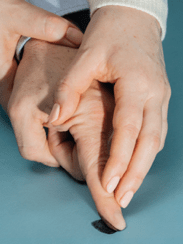
    Got another “Can’t Put My Finger on It” short story. (It’s doubly funny because hands come into play with the work.) I have come around, and I will say that I do like Joseph O’Neill’s “Light Secrets.” And I did come around to it, because when I finished reading it, I wasn’t sure exactly what I had read. “What is this?” I said out loud in my car. See, I was in the process of moving my car for the street sweeper, but the sweeper hadn’t arrived yet, so I decided that I should read this story. The sweeper never arrived, so as I walked back to my apartment, I contemplated what I had just read. And my opinion began to change.

    Though “Light Secrets” is a contemporary story taking place in New York City, it feels more akin to a late 70’s early 80’s New York – like in a Woody Allen movie. You know, smart professional people in their 40’s with leisure time to lunch, walk the City, attend friendly dinner parties, and enjoy robust social circles. I’m not bringing this up as a criticism of the work, more to establish the setting and mentality of these characters; their lives have a breath and space to them which allows for internal contemplation, and though they all have outside pressures in their lives, none of those pressures are paramount to define their being, but are more like accessories to highlight characterization. For a story like this to work, you have to believe that these characters are the type of people that would take the time to analyze and digest what their friends say and how it may apply to their life, and not just move from moment to moment.

    And with that said, I’m not sure what “Light Secrets” is trying to say, but I liked it. I like the sensibility of it. How the protagonist speaks to us like we’re a friend. I like how things are left undefined, and rough around the edges. How moments seem to have an intersection, but maybe it’s just a coincidence? Does the touching of hands mean anything, or is it just something that happens? Can a lifetime of good deeds be undone by an unconfirmed rumor? Should it? I kept finding myself going back and thinking of the old adage, “If a tree falls in the woods, does it make a sound?” Does a good deed have to be acknowledged for it to have impact and relevance? Is existentialism just dumb luck which we have thought too much about?

    I hate to admit it, but I am a sucker for stories like this – undefined and leading to interpretation. You know, which door has the tiger behind it, and stuff like that. “Light Secrets” is right up my alley, and I think O’Neill did an excellent job of balancing his story, in regard to the information we are given, and the information left out. It’s a well thought through work, and I appreciate that it required me to slow down a step, and just contemplate life for a bit.

  • Short Story Review: “Safety” by Joan Silber

    (The short story “Safety” by Joan Silber appeared in the December 8th, 2025 issue of The New Yorker.)

    Illustration by Chris W. Kim

    You know, every “time” is a “historic time” but some are more historic than others. I will agree that we are in the middle of one of those historic times, and if I am lucky enough to have grandkids, then I imagine they will ask me “WTF was everyone thinking, grandpa?” The good news is that over the past three or four months, I have started to see works of art in different media start to tackle the events of deportation, disappearing, and what effect these policies will have on America. I am going to throw Joan Silber’s “Safety” in with all of these works, though uneven, I applaud what this story attempted.

    Overly Simplified Synopsis: Two girls become friends growing up in New York, one Muslim the other Jewish, and both decedents of people who immigrated to the US to escape dictators. They go their separate ways in life and reconnect in New York, where the Muslim friend now has a child and a partner who is a comedian. When the comedian is on his way home from a gig, he is disappeared by the Administration.

    There is an ease to this story, and a simple directness to the writing. What it does well is create a picture of the modern melting pot that America is – people of different backgrounds are still coming here, and their children are still connecting with people that are different from them, and finding a commonality in our shared humanity. Silber does well in creating a context for the Muslim family regarding escaping the Nazis, being forced to migrate by Stalin to Uzbekistan, and the trauma of family separation.

    Yet, through it all, I couldn’t shake the feeling that this story was pulling its punches. There is a huge amount of drama here that is being sieved through a philosophical existential filter, but it never seems to amount to an emotional climax. For example, think of how these families lives’ have been influenced by authoritarians – from being pushed out of home nations, to being pushed together in America – and how these families have made new lives for themselves. And when a new Authoritarian pressure is applied, the characters seem more resigned, as if ordained to this fate, rather than free to exist.

    Ultimately, I appreciated this story, and Silber, for taking a swing at an issue that needs to be swung at. “Safety” uncomfortably reminds us that history does repeat itself. That immigration, deportation, and citizenship (both in its legal and the social definition) needs to be discussed and debated again, so we can finally find a way to break this awful cycle.