(The short story “Family Lore” by Téa Obreht appeared in the November 9th, 2026 issue of The New Yorker.)
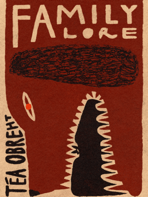
Illustration by Tabby Booth
I have been trying to find the source of this quote, and I believe that either Edward Albee or David Mamet said it, but it goes something like this: All modern drama revolves around the idea of deception, or characters hiding the truth from each other. (I do know that characters deceiving each other is like 99% of all the plots for situation comedies.) This dramatic device makes total sense; a character wants something, so they lie to others to achieve their goal. And there is another element, which is the penalty that will occur if the lie or deception is exposed. This is the risk, which frames how powerful the character’s want is, but it also shows what will happen if the lie falls apart, which you know, creates peril and more importantly, drama. It’s a simple device, and in regard to Téa Obreht’s “Family Lore,” a device whose execution in this story was fumbled, leaving the story on flimsy legs.
“Family Lore” does play a bit like a sit-com. It’s the story of a family returning from the hospital with their new born baby. The husband bumbles his way through issues, trying to solve them as best as he can, all the while trying to keep these issues from his wife. At first, he struggles at finding an inconsequential baby hat that he lost, but then it gets more complicated when he tries to recover a bat, that may have bitten his dog, so he can send it to Animal Protection to test for rabies. See, a rather sit-com like premise, which implies opportunities for complications and comedy. Yet, the husband’s motivations are never solidly concrete in the story. You could make assumptions about his motivation, but as far as I could tell, there was only one line in the third paragraph of the piece; “But his job was to keep the world at bay.” And this line was regarding the husband trying to keep the wife calm when things go bad. Sure, it works as his motivation, but it’s flimsy. I have to say that this is an example of why a writer should “show” and not “tell” the reader. As in, what happens when the wife gets upset? Did it happen in the past, and if so, what was the outcome? How did that outcome affect the husband, let alone the relationship between the two? Obreht does “show” other situations with characters, the neighbors for example, which explain why the husband treats them the way he does. So, I am confused why this fundamental motivation of the story is resigned to just one line.
This flimsy motivation choice by Obreht does have a ripple effect as the story progresses. As the stakes get raised in the story, and the husband stumbles into more and more lies, I began to question why he was doing this to himself? I understood the lies toward the downstairs neighbor, but why was he lying to Animal Protection, or the upstairs neighbor, or the party goers, and especially his wife. It appeared that if he told the truth to these people, he would have gotten what he wanted easier. It started to build a resentment, and a frustration in me toward the husband. Honestly, if he picked up his phone and told his wife everything, I think it would have solved his problems with a minimum of effort. So, why was he lying?
It’s as if “Family Lore” was almost there as a story. Which is too bad, because I don’t think The New Yorker publishes very many humorous stories. And it did have all the pieces to be a good one; it was building toward something, I enjoyed how the piece ended, and most importantly, it was funny. It reminds me of another old adage when it comes to a character dealing with a situation that keeps getting more and more out of control; for it all to work, the audience has to understand that the character fully believes that they will still succeed. When you can’t figure out why a character is doing what they’re doing, it’s hard to have confidence that their success is even important.
