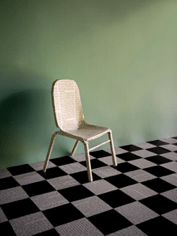
(The prose poetry piece “Plum Mother” by Michael Nickels-Wisdom was published August 27th, 2025 on Lost Balloon.)
I don’t know if there is officially a genre of poetry that is about pets, but there should be. Most of these pieces are melancholic in nature and conclude with the pet passing on. What these pieces remind me of is Poe’s “The Philosophy of Composition,” in which he states that, “the death, then, of a beautiful woman is unquestionably, the most poetical topic in the world.” I would argue, and I am not making a joke here, that you could substitute one’s “pet” and come to the same conclusion.
Please, let me explain…
I was struck by this thought of while reading Michael Nickels-Wisdom’s “Plumb Mother.” This is a short prose poetry piece and it would be easy, and unwise, to simply see this as an anecdote of the speaker’s quirky but loved dog. From the beginning, the dog is delivered from above, down to the speaker, and by the second line it is established that the dog is well taken care of and has lived a long life of 17 years with the speaker and their family. In the dog’s middle age, she is given a plum which she treats as a child; acting as if it were nursing and defending the plum when it is “threatened.” Unfortunately, the plum withers, leaving the dog to set it down and mourn its passing.
Poetry can exist and function in a timeless state, but in this piece we clearly have a past and a present. This dog now exists in the past, as we are told that in the second line, which hits on the “most poetical topic in the world,” while also establishing a melancholy feel for the rest of the poem. Though the story of the dog’s actions with the plum are humorous, it is in the last line where it is understood that there are two sets of mourning occurring here; the dog and the speaker. Yes, this is a piece about a funny incident with a dog, but it is a testament to the affection the speaker has for their pet, and to the joy and affirmation that a pet can bring to one’s life.
It is tragic when a loved pet passes on from our families. They do give so much to enrich our lives. Reading “Plum Mother” reminded me of the tragic truth of having a pet, as we will out live them, but loving an animal as a family member is always a gift.
(The short story “Project” by Rachel Cusk appeared in the September 1st & 8th, 2025 issue of The New Yorker.)
Photo illustration by Stephen Doyle
I am a big fan of Rachel Cusk; have been for some time now. There are a great number of reasons why I enjoy her work, and when I read anything by her, such as “Project” in this week’s New Yorker, my fandom evolves into admiration, and even a little jealously. I am not jealous of her talent as a writer, envious might be the better word for that, but when I read her work, I wish I was the type of writer that had time. Cusk’s fictional version of herself, though narrator might be a fairer description, possess the greatest gift of all; time. Time to observe and contemplate.
In “Project,” the narrator contemplates how who we are gets created. This contemplation leads to a path that bends and turns and takes us to people in the narrator’s life. First we meet M, a movie star and model. The narrator is thinking of writing M’s autobiography, which M’s response is to “…just make it up.” In this first section of the story, the narrator intertwines her interactions with M, while also speaking of a book she is reading by a woman who details the horrid abuse she suffered at the hands of her stepfather. It is a strange comparison, if not a juxtaposition. In Cusk’s assured hands, we see how these woman took their situations, fought back and went forth to create better versions of themselves, yet both spoke of a moment where their childhoods were lost… But even as I try to describe this, I am not doing this story justice. The story moves on the narrator’s partner, and his bout with an aliment and the need to a brief stay in a hospital. Then there are questions of the time we have and how we share it. Why we live the way we live and where we live…. See, not doing this justice.
This story falls into my favorite Cusk style of writing – It just flows. Maybe this type of writing is like stream-of-consciousness-lite. These thoughts and ideas have depth and weight to them, but they don’t get tangled up in minutia and tangents. All of these disparate ideas roll across the page, with observations of the life the narrator lives, but also how some of these truth and universal; Or at least there is a hope that they are. This is a story seems to be celebrating the existential gift of being able to create our self, and chose how to live out that creation. And to do all of this, to have a life that can be observed, we need time for reflection.
And through all of it, the ins and outs of this story, Cusk has a wonderful melancholic final paragraph. Not so much an observation, or a contemplation, but a memory of raising her children; when trust was tangible and innocent. That taking the time, to remember and re-experience, is a continuous step in the project of self creation.
I had a humanities teacher in high school who explained existentialism to my class this way; “We are all free to make choices in our life. Nothing is determined. You can choose to be whoever you want. Being able to choose doesn’t always mean you will be happier.” At least that’s the notes I took in my first journal way back in 1995. I went back to this journal after I finished reading Miriam Toews’ story “Something Has Come to Light,” because not only did the story make me think about choices I’ve made, but also about living with those choices.
To sum this story up, perhaps a bit too simply: A grandmother has written a note/story for her grandchildren about a moment in her life where she should have said yes, but said no to the neighbor boy, Roland. Some years later the boy moves away, but dies, and his parents bury an urn that contain his ashes on their property. Sometime even later, after the parents on the neighboring property pass away and their land is to be sold, the grandmother sneaks onto the property at night, digs up the urn, and reburies it on her property. Every day, the grandmother has passed by the buried urn, and tells Roland she should have said yes. The letter/story ends with the grandmother asking the grandchild to dig up the urn and return it to Roland’s surviving sister, or if that’s too much to ask, leave him, and continue to tell him that grandma made a mistake and should have said yes.
I loved this story. And I loved how this story snuck up on me, how it placed itself in my head, and kept poking at me, telling me to enjoy it more. The language here is simple and to the point, which is what you would expect from a woman that has lived a simple but contented life. The way it was written reminded me of how the Midwestern women in my family spoke – there was a plainness to it, but that didn’t mean that the words didn’t have nuance and revelatory meaning to them. The grandmother is a woman who doesn’t complain, but also is tough and doesn’t put up with much either, yet will never be rude about it.
The story really is about Roland, and the affect he had on her life. Though the two of them weren’t close, according to the grandmother, you can tell that she had a deep appreciation for him. Roland was different from the other people in town. His great sin appears to be that he sat on the front row at concerts, had a gift for the piano as demonstrated with a concert he put on in town and which the grandmother saved a poster from. Then one day Roland rode up to the grandmother and asked if she wanted a ride, which she answered no. A decision she would regret as Roland moved away to England. The town never forgave him for leaving, and I sense that the grandmother never spoke up or out in Roland’s defense, but she lived with that regret. A regret that would possess her to the point that not only did she need to apologize to Roland for the rest of her life, but also to possess Roland for the remainder of her life.
What I find captivating about this story is that it isn’t necessarily a romantic bond between the grandmother and Roland. Though I think there is a tinge about, like a frosting, but it’s not the driving motivation. What I believe the story is telling me is that the grandmother is mourning the exact moment where her life could have gone in a different direction. That she could have been, or done, something different. But, and this is most important, she does not regret her life. I say this because the start of the story, the grandmother explains that she keeps all the pictures of her grandchildren in a photo album next to her bed; how she looks at them, most nights. This is the act of a woman appreciating the life she lived, and what her and her husband created in this world.
What I find Miriam Toews is asking me with “Something Has Come to Light” is can it be possible to love the life you led, but also mourn the moment when it could have gone in a different direction? Can you love a person who could have been your agent of change, while also not wanting to change? Can a paradox like this exist in a contented person?
Perhaps. Perhaps the grandmother never wanted to let go of that chance encounter, to say she was sorry to the one person who wasn’t like anyone else she ever knew. Ultimately, the grandmother made her choice, and she learned to live with it, and with regret at the same time.
Reviewing stuff is fun. Clearly, because I do it often. Who doesn’t like sharing their opinion and acting like an expert? It’s all fun and games until you hit a critical theory paradox; Is it possible to acknowledge that a story is good, and well written, but at the same time does not resonate or move me? That was the situation I ran into when I finished reading “The Queen of Bad Influences” by Jim Shepard.
To be clear, “The Queen of Bad Influences” is a good story, well written, and I have no qualms in recommending that you should read this story because it has a very relevant theme, is constructed well, is insightful, has a bit of action and tragedy to it, the protagonist is engaging and grows over the story, and the use of language is spot on. All the boxes are checked here.
Yet, I just didn’t feel anything.
Look, I write these reviews for my own enjoyment, and as an exercise in analyzing what makes a short story work, or not work, so I might improve my ability as a writer. On the whole, I will only review a work if it moves me, garners an emotional reaction, either positive or negative. If I don’t have a reaction, then I let it go and move on. (Now, if someone wants to pay me, I’ll review whatever you send me.) These aren’t deep philosophical rules that I follow, but more like functional guidelines.
When I finished “The Queen of Bad Influences,” I didn’t have a reaction to it. At first I was going to write something negative about the piece, but the more I thought about it, the more it didn’t seem accurate to do it. I went back through the story, and I really couldn’t find a fault with it, save one line, but that wasn’t that big of a deal. What I came to accept is that this isn’t the story or the writer’s fault, it’s me. This is just not my thing.
Let me try putting it a different way, which my Gen-X grunge mind can appreciate; “The Queen of Bad Influences” is like Alice in Chains. I get why people love the hell out of Alice in Chains. Alice in Chains was made up of some really great musicians, who wrote some really great songs. I’m not an Alice in Chains fan because they suck – I’m not a fan because they don’t resonate with me the way Nirvana, or Pixies, or a host of other grunge bands do. It’s me, not them.
It’s me, and not Jim Shepard and “The Queen of Bad Influences.”
I like this story a lot, so I’m not gun’na fart around with some cute opening here. “Nocturnal Creatures” by Saïd Sayrafiezadeh is a very good story and you should read it.
Overly Simplified Synopsis: A exterminator meets a single mother and her son while on the job, and they all become involved.
To start with, Saïd Sayrafiezadeh crafts this story very well. Every time I have read this story, I keep coming to a better appreciation of how all the pieces of this story are laid out, how they interlock and interact. For example, the first section of this story establishes the character of the exterminator, how he views himself and his job. Then going into the next part, when he meets the mother, we are shown the ways she tries to take care of herself and her son which leads us to understand, from the previous section, why the exterminator would identify with her. It’s a little cheesy to say this, but Sayrafiezadeh does an excellent job of “showing” us who these characters are, and not “telling” us. (And somewhere in the world, a creating writing professor just got his wings!) But seriously, each section builds on the previous, creating a momentum in the story with their actions. The narrative never gets mired down in explanations, because Sayrafiezadeh provides a clear understanding of these characters motivations by what they are doing.
And these are characters that have lived, and maybe they haven’t had the best breaks in life, but they aren’t broken either. There is an optimism to them, but also a melancholy. Are they repeating past mistakes, or trying to make amends for their past? I was fascinated with how the exterminator never said he cared about the mother and her son, but his actions were that of a guy who wants to take care of them. The fact that he gave up his day sleeping time to be with them, wasn’t lost on me. And this was a mother who hadn’t given up on her ambitions, but she knew she had responsibilities which she did her best to uphold. I felt I knew these people, and wanted them to succeed, to carve out the happiness they deserved. But there felt like a little dark cloud hung over their lives, keeping the story grounded in realism, because life’s not always fair, no matter how good intentions attempt to be.
I wanted it to work out. I wanted them to be happy, but there isn’t a clear, concrete answer to what happens next, and that’s okay. I’m good with the decision that Sayrafiezadeh made to end it the way he did. Maybe it’s a bit of a ploy – yet I would argue that over the course of the story, we have been shown how these characters continually make choices to be together. So why would that change at the end of the story when they reach the crux of their situation?