Tag: Relationships

  • What It’s Like To Be a Stay-at-Home-Dad? (“Mommy Has Questions” Podcast Interview)

    Here is the episode of the podcast Mommy Has Questions that I was interviewed on. It was a fun conversation about stay at home parenting, male roles in the family, and the couple of other things. I had great time, enjoyed the discussion, and the whole Mommy Has Questions team made me feel comfortable and right at home. So thank you for having me.

    Please, give it a listen – follow, subscribe, leave a comment. You know the drill.

  • Short Story Review: “Door in the Woods” by Chris Scott

    (The flash fiction story “Door in the Woods” by Chris Scott was presented at Okay Donkey on October 3rd, 2025.)

    The “Door in the Woods” by Chris Scott pulls off my favorite story telling trick; It leaves me with more questions than answers, but not in the frustrating “jerk you around” kind’a way. This is a work that straddles realism and surrealism. It is relatable, authentic, but also funny and absurd. In little over 1,100 words, it is a very specific story addressing a rather universal experience most encounter in their relationships.

    The story starts off with a bit of mystery and tension. It isn’t until the third sentence wherein the door is identified. Even in the second paragraph, when more of a description of the door is given, there hangs in the air a feeling that the door is unnatural in origin. Then to add to the tension, it is shared that this couple has been in therapy in an attempt to save their marriage. Once they decide how to pass by/through the door, and do so, the uneasiness of the situation fades, and seems to be setting up a metaphor for the couples’ relationship. But there’s a complications; each person remembers the encounter with the door differently.

    Was this a supernatural encounter? Is this couple like every couple, and having a moment where they remember things differently? Is the door affecting their ability to remember? Or is this misremembering an act of sabotage by one of the partners? These questions hang, and motivate the narrator, who is the husband in the couple. Truth isn’t the goal, when an answer, a conclusion, or closure is what’s needed.

    Scott does an excellent job creating tension, unease, and relatability in this work. The husband’s need and search for an answer from this unusual event underscores his desire to create stability and peace in this rocky marriage. I don’t know a single person who hasn’t agreed to a lie to keep a fight from bubbling up in their relationship. In this story, you can feel the eggshells the husband stands on, and the fear that this could be the event to push this marriage over the edge.

  • The Age of Dinner Parties

    The Age of Dinner Parties

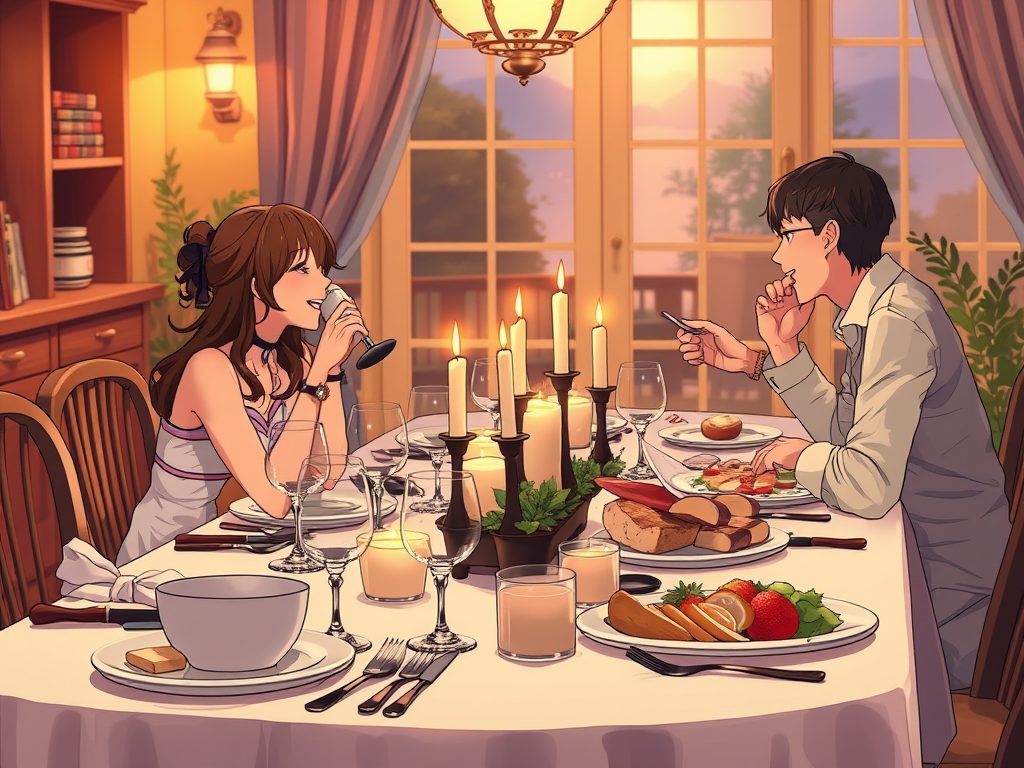
    The other day, the kid was asking me and the wife lots of questions of what our life was like before she was born. It’s a fair and very good question, or more accurately, questions that she was asking us. The wife and I were together for nine years before the kid was born, so we had a good amount of time of being a couple before we became a family.

    As I reminisced about our past life, it dawned on me that we had a very unique period of about two years, where we host other couples at our place for dinner parties. And on the flip of that, we were invited over to several couples dinner parties. It was a very specific time of us and all of our friends, as we were entering our thirties, beginning to be established in careers, all in committed relationships, but we weren’t married yet and didn’t have kids. I mean, as soon as people started getting married, kids weren’t far behind, and then some started moving out of the City.

    I still have a Spotify playlist for one of our dinner parties from long ago.

    It was a fun time. Usually we hosted on a Saturday night. The wife, at the time the girlfriend, would come up with the menu and I would shop for it over the week. We’d do some prep on Friday night, and most of that would be the making of the desert. The wife was the chef and I the assistant. My strength was in cutting veggies, and making drinks. The wife did the heavy lifting for the rest of the food. We made a really good team in the kitchen, and by the time the other couple arrived, I only had the entertain for maybe 30 minutes and then we were eating.

    The other side that I miss was the conversation. Most of the time, it always started off the same way. When the guests would arrive, we’d talk about what trains they took to get to our place, and transit in general. Next we’d sit for the meal, and the conversation would move to food; either on cooking or places we’d eaten at recently. By the time desert came around, people had a drink or two, then things got really fun. People would tell stories, or experiences they had, or a friendly debate would occur. It was the moment when we started really getting to know people, who they were, and how they worked.

    I remember that after one particular fun and engaging dinner party, me and the wife high-fived after the guests left because we were so excited and proud of ourselves for hosting such a good evening.

    But things changed, and having an adult evening over at someone’s place, only adults, is a pretty rare thing now. I’m not complaining, because it was a moment of our lives that existed for a very specific time, and place.

    Just hadn’t thought about it in a while.
  • Happy, Yet Not Secure

    The other day, I was trying to explain to my wife how I feel most days, which is happy but completely insecure. And this, is a vast improvement over the last couple of years.

    The insecurity is not whole heartedly an emotional insecurity. It’s a financial and general safety insecurity. When I have written about our financial situation, I have always tried to be as honest as possible without betraying any personal information – and the honest assessment of our financial situation is that we are in debt. The debt (credit cards, car loans, and student loans) is manageable, but also just large enough to delay us from making sound investments in our future. Though we have made progress, it does feel like this debt will never be overcome, and because of that, the feeling of a disaster being around the corner is always with me. A disaster that will ruin us, or set us back for years. This is the feeling of insecurity that I have daily.

    But I can honestly say that this is the happiest I have been in a very long time. It’s been a little over five years since my mom’s passing, but it still feels recent. It’s difficult losing your mother, and I did have an especially close relationship with mine, and with her gone, everything felt sad. No matter what I did, or my wife did, or the kid did, there was the tinge of sadness always right at the edge of everything. It’s taken awhile, but the joy has started to return, and it’s fully based in an appreciation of the love that is around me. For that, I am grateful that I do have friends and a family to share with.

    Yet, I am left with this dualism in my life; there is so much love and joy, but also I can’t shake the feeling that I have sand underneath my feet. At best I can say that these feelings exist in a balance; nether one is stronger than the other. And the truth is that I often have to force myself to appreciate the joy and love that is around me.

    I believe that being happy is a choice. But security? Do I have to earn that?

  • Shorty Story Review: “Untranslatability” by James Yeh

    (The short story “Untranslatability” by James Yeh, appeared in the January 6th, 2022, Issue 6 of The Drift.)

    In a love story, really, there are only two outcomes; they get together, or they don’t. If they get together, it’s because the characters had to struggle to get there, and they learned something along the way which will lead to why they deserve to be together. If they don’t get together, then at least they learned something about themselves which will make them better people, and thus, the relationship was necessary. In “Untranslatability” by James Yeh, the author tells us near the start of the story, that the characters, Charles and Emily, are doomed, which puts them in the “don’t get together” category.

    The story follows as such; Emily, who is a translator, gets a grant to go to Germany and translate the work of one of her favorite writers. Charles, who is a struggling writer working at a media company, supports this decision, but Yeh makes us know that Charles agrees to this because it reflects well on Charles to have his girlfriend this talented, not because he believes in Emily. Since we know the outcome, Emily meets someone else, breaks up with Charles over a video chat, and he is left wondering what to do next. Charles decides to make a grand gesture of going to Germany to try to win her back, which plays out not as awkward as you would think, but is still doomed, as we know it will be. Charles returns home, and starts to get his life in order. A year later, Emily’s book, on the writer she translated, is published, and Charles writes a blog about it. Then she invites him to the book launch party, where they see they have come to a place of understanding.

    I struggled with this story, not sure how I felt about it. In fact, I wasn’t even sure how James Yeh felt about it either. Yeh seemed to be very disappointed in the character of Charles, which makes you unsympathetic toward the character. At the same time, Emily does come across as a neo-Magic Pixie Girl; smart, confidant, driven, and successful without a fault in sight. Yet, I also felt like Yeh made this decision to try and buck the stereotype of these types of stories. Maybe they were doomed, not because they were star-crossed lovers, but because they weren’t good for each other, and no amount of change or internal growth was going to garner a different result. Maybe. But I’m still not sure. Yeh did touch and some very authentic moments, such as when Charles was torn between concern for Emily’s sick father, and his contemplation if he could use that situation to his advantage. (Very shallow, but a brutal honesty.) And the final paragraph was especially on the nose; maybe you can learn something, but still not change who you are. Maybe.