Tag: Rachel Cusk

  • Short Story Review: “Project” by Rachel Cusk

    (The short story “Project” by Rachel Cusk appeared in the September 1st & 8th, 2025 issue of The New Yorker.)
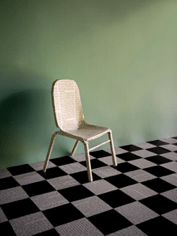
    Photo illustration by Stephen Doyle

    I am a big fan of Rachel Cusk; have been for some time now. There are a great number of reasons why I enjoy her work, and when I read anything by her, such as “Project” in this week’s New Yorker, my fandom evolves into admiration, and even a little jealously. I am not jealous of her talent as a writer, envious might be the better word for that, but when I read her work, I wish I was the type of writer that had time. Cusk’s fictional version of herself, though narrator might be a fairer description, possess the greatest gift of all; time. Time to observe and contemplate.

    In “Project,” the narrator contemplates how who we are gets created. This contemplation leads to a path that bends and turns and takes us to people in the narrator’s life. First we meet M, a movie star and model. The narrator is thinking of writing M’s autobiography, which M’s response is to “…just make it up.” In this first section of the story, the narrator intertwines her interactions with M, while also speaking of a book she is reading by a woman who details the horrid abuse she suffered at the hands of her stepfather. It is a strange comparison, if not a juxtaposition. In Cusk’s assured hands, we see how these woman took their situations, fought back and went forth to create better versions of themselves, yet both spoke of a moment where their childhoods were lost… But even as I try to describe this, I am not doing this story justice. The story moves on the narrator’s partner, and his bout with an aliment and the need to a brief stay in a hospital. Then there are questions of the time we have and how we share it. Why we live the way we live and where we live…. See, not doing this justice.

    This story falls into my favorite Cusk style of writing – It just flows. Maybe this type of writing is like stream-of-consciousness-lite. These thoughts and ideas have depth and weight to them, but they don’t get tangled up in minutia and tangents. All of these disparate ideas roll across the page, with observations of the life the narrator lives, but also how some of these truth and universal; Or at least there is a hope that they are. This is a story seems to be celebrating the existential gift of being able to create our self, and chose how to live out that creation. And to do all of this, to have a life that can be observed, we need time for reflection.

    And through all of it, the ins and outs of this story, Cusk has a wonderful melancholic final paragraph. Not so much an observation, or a contemplation, but a memory of raising her children; when trust was tangible and innocent. That taking the time, to remember and re-experience, is a continuous step in the project of self creation.

  • Personal Review: “First Love” by Gwendoline Riley

    For the life of me, I don’t remember who or what recommended First Love to me. It was on a list of books that I should read, and when I found a copy of it at the Strand, I picked it up without a second thought, nor having any idea what I was about to get myself into. To be honest, I appreciate the joy and excitement that comes from reading a book that I know nothing about, by an author I also know nothing about, because it does afford me the ability to truly experience a work without any preconceived notions. In this situation, I didn’t even read the description on the back of the book.

    First Love isn’t about the “happy” side of love. It’s not about the joy, fulfillment, or really any of the positive side of love. Oh, now and then, that side of love does show up, but on the whole, that’s not what this novel wants to explore. For the protagonist Neve, she shares with us all of people that she first experienced a form of “love” with; her mother, her father, a boyfriend, and her husband. Each relationship is troubled, difficult, in some cases even toxic, and they all overlap on each other, influencing each relationship from actions that happened in the past, and fears of what might happen in the future. For this reason, it is not a traditional novel, and time and events shift – nothing is linear here, but it adds greatly to the theme of these loves bumping and conflicting with each other.

    I found myself thinking about the works of Rachel Cusk and Maggie Nelson as I read this book. Riley’s novel tackles a serious subject, but the narrative never becomes weighed down, as it feels like a conversation. As such, this book was akin to the Outline Trilogy, and the examination in Bluets. It felt very internal, that we were being let in to very personal thoughts and exanimations. I will say that though First Love is a new form novel, like Outline, Riley did have a more traditional climax here, which gave the novel a satisfying conclusion.

    When I read a book like First Love, I am rather envious of writers like Gwendoline Riley, who create drama and self-examining characters, while never making their stories so personal that it becomes dull of whiney. It’s a bit of a magic trick, that is fun to experience. Thank you, to what, or whomever put this book on my reading list.

  • Personal Review: KUDOS by Rachel Cusk

    (SPOLIERS, but I don’t think you can spoil this novel…)

    I’m a big fan of Rachel Cusk. Ever since I read a piece on her in The New Yorker a while ago, and I think the article was about the OUTLINE Trilogy, I have found her to be a huge inspiration and a fascinating author. She does a great job in fooling me in believing that we are close friends, and the conversations she shares with me, makes me feel smarter. Like all very talented writers, she’s also part magician – conjuring a relationship with the reader that never really existed, and making us feel that we are the only person she is talking to.

    I finished KUDOS, the final novel in the OUTLINE Trilogy last week. All in all, it took me the span of five years to read the three novels. I can understand how a person would argue that this delay in completing the series would be detrimental to my understanding, if not appreciation of the trilogy. Yet, I don’t believe it has. Returning to these books is like visiting an old friend from college. Things pick up right where they left off, no feeling of lost time. And this friend doesn’t try to guilt me for my absence.

    If one were to look up reviews for these books, almost all of them will make references to how these books are a new form, even an experimental version, of what an autobiographical novel can be. Some will even compare the books to Karl Ove Knausgaard’s My Struggle series, which might be applicable. I don’t agree with the comparison, as Karl is overtly autobiographical, while Rachel only hints at autobiography, but clearly has kept her protagonist a fictional version of herself.  Which lead me to start to believe that all the “new form of a novel” was more marketing hype than actual reality.

    Don’t get me wrong. I loved KUDOS, and the other books in the trilogy, OUTLINE and TRANSIT. As I settled in on reading this book, I found the familiar style that Cusk has; this very easy, yet highly intelligent way of writing. She doesn’t speak down to the reader, but it feels that I am being included in the conversations. This time around the author/protagonist is at a writers conference, talking to other writers and people. Again, the persons who occupy this world have no issue, and are very adept at opening up and sharing events, observations and experiences with her. At one point, another writer does point out how odd it is that all the characters in the author/protagonist’s novels have no problem confessing all their sins without much prompting – a sly mete joke Cusk put in her own novel.

    It’s true, people do not speak the way Cusk’s characters do. But, Tennessee Williams’ characters speak in a way that can only exist in the worlds that Williams creates, and as such, I believe that Cusk is casting that same spell. It’s not reality, but it is a world I would like to live in. To speak to a person on a plane about the family dog of theirs that just died, or the tour guide who loves to walk the city, or the other women writers that still have to deal with ex-husbands that intend to do them harm, both physically and emotionally. It’s an unburdening that has no expectations to it. The reader isn’t asked to act, or pass judgment, but just hear and witness that these lives exist. It’s an environment that becomes very comfortable, and enjoyable.

    And in the end, without a climax or even rising action, the book concludes, leaving the feeling of conclusion. That to me is the trick, and an impressive one at that. I have been given a journey, but I am not sure where I have gone, or what, if anything was accomplished. But I know I went some place, I learned, and that must be what is accomplished. And as I ponder on that, maybe it isn’t a gimmick to call these books a new form of novel. There is a different way to tell a story after all.

  • The South Bank Show – Discussing Art

    I am not as disciplined as I would like to be. I say this because last night I was going to be a good boy – watch a little tv, and then finish reading Rachel Cusk’s new short story in The New Yorker.

    But then my brain says to me; It says, “You remember the theme song to The South Bank Show?”

    “I do,” I says. “I think it was written by Andrew Lloyd Webber, of all people.”

    “You should look that up.”

    “I will, and, switching subjects here, a good night’s sleep is for losers.”

    “Tell me about it.”

    So, YouTube has a shit ton of South Bank Show videos. And I hope you know what I am talking about. See, back in the early 90’s when BRAVO was the greatest cable channel for the arts and people who couldn’t sleep, they would show the documentary series The Show Bank Show which was originally broadcast on ITV in Great Britain. The show covered all subjects that had to do with art and pop culture. You could get an episode on Gore Vidal, and then one about The Talking Heads. For a very impressionable junior high kid, these shows were mind altering because they exposed me to different viewpoints, and arts, and lifestyles, things that I would never run into living in the suburbs outside of Dallas.

    I found the intro music of The South Bank Show (It was in fact written by Andrew Lloyd Webber for his brother, a cellist, Julian Lloyd Webber. Here’s a full version of the song) and here is a compilation of all the intro versions. (The 1989-1990 is my favorite.) Just hearing the music again, and seeing the animation, I was reminded how I would get a genuine deep curiosity thrill of what was about to be shown on that program. For that thirteen-year-old me, I was being shown a world of creativity that I knew must exist, but was just beyond my fingertips. It was a world that I wanted to be in, and that show made me feel like it was completely accessible.

    I decided that I couldn’t just stop at the theme song, and I should watch an episode. I went with the one on Steve Martin, which I remember seeing way back when. It’s when Martin was transitioning out of his “Wild and Crazy Guy” persona, and was beginning to make smarter comedies, such as Roxanne and LA Story. The documentary gave him a good platform to explain how his “crazy” persona was more like a comedy experiment where he was trying to write jokes that were just funny, and didn’t have traditional punchlines or set ups. I read his memoir, Born Standing Up, which covered his start in comedy, to when he quit doing standup, and he goes into more detail on his reasoning and thought process of what makes a joke work. What I took away then, as I did now, was how smart Steve Martin is, and how he knows the balance of thinking about, but not over thinking, comedy.

    See. Stuff like that is what makes The South Bank Show still interesting to watch. How the art and the artist are entangled, and what they go through, and how they view the world around them.

    I got about five hours of sleep last night.

  • Personal Review: A Visit from the Goon Squad, by Jennifer Egan

    I used to manage a theatrical rehearsal space, and we saw lots of people come in and out of the place every day. I will say this about the theatre community; it is well read. I say this because of the amount of books left in the Lost and Found box. Sadly, the majority of the lost books were never recovered, and after a month, if still not claimed, it was open for the staff to take them. That is how a paperback copy of A Visit from the Goon Squad, by Jennifer Egan entered my life. It was in my possession at least for seven years before I decided to read it over the Christmas holiday.

    Goon Squad won the Pulitzer and the National Book Critics Circle Award back in 2011, and I had heard good things about it for awhile. I went into it knowing nothing of the plot, characters, structure or anything. I did know who Jennifer Egan was, and I liked her writing, so I was looking forward to reading it.

    The book is structured in an “A” and “B” side, like a vinyl album, which is fitting as the novel is about people in, on the periphery of the music business, as well as the people who know the people in and on the periphery of the music business. As such, each chapter of the book is like a song on the album, so the chapters are not telling a linear story, but behave more like songs on a concept album – held together by a theme. What Goon Squad reminded me of was Rachel Cusk’s Outline Trilogy and her novel Second Place, in that both authors are looking for new ways to approach the novel form, especially with the emphasis on theme over conventional plot to keep the narrative moving forward. That right there made me enjoy Goon Squad.

    Yet, I did find the two issues stuck in my craw with this book.

    First was the character of Bennie, who along with the other character Sasha, are the closest the novel comes to having main protagonists. For lack of a better description, Bennie is a middle aged record executive, and former puck musician, who is not handling being middle aged very well. I am still amazed at how often in contemporary/modern literature, that the middle aged, sad male character is used. It’s such a stock character, and hasn’t changed since his debut back in the late 50’s or early 60’s. I was hoping that Egan was going to challenge the cliche, such as turning this Updike/Cheever type character on its head. Unfortunately, Bennie gets mired in the stereotype of being divorced, having a distant and disgruntled child that he can’t figure out how to connect with, and his penis stopped working like it used to, and that takes up a lot of his energy. Luckily, Bennie doesn’t dominate the book.

    My second issue was the final chapter, “Pure Language.” Set a few years in the future from the rest of the stories, it is the only one that doesn’t land. I think it’s due to trying to get this final story, or song on this concept album, to wrap up the whole theme of the book. Bennie is in this story, but it revolves around a character named Alex, who was featured in the first chapter, along with the other main protagonist Sasha. There is a lot happening in this story, which feels at odds with all the other stories which are more focused and concise on what they are trying to say. And due to this, the book lands with a sloppy thump, thus denying us the ending that the theme of the book deserved. Sticking the landing is hard.

    Believe it or not, I did enjoy this book. It doesn’t sound like it, but I did. It is well written, and very funny. And I liked that Egan did play with form and structure, using the world of the record business to address how we all get older, things change, and sometimes we start to become people we no longer recognize. This was best exemplified by the character of Sasha, who I wanted to hear more from in the best way possible. Her journey was the most honest of all the characters. A conventional author would have written a book just about her, but Egan chose to just give us glimpses of Sasha’s thoughts, and then gave us a hard look on how her actions affected the lives around her.

    I enjoyed reading A Visit from the Goon Squad, and Jennifer Egan is a writer that keeps pushing for new ways to tell stories, which is something that I deeply respect. The novel form cannot stay stagnat, and it has to evolve as soceity and culture evolves as well. I u