(The short story “My Balenciaga” by Han Ong appeared in the March 23rd, 2026 issue of The New Yorker.)
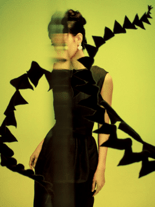
Photograph by Harold Julian for The New Yorker
I love the use of McGuffins as a plot device in storytelling. It gives instant motivation, and when used well, can give valued insight into a character’s constitution as they seek the MacGuffin. (In case you aren’t aware what a MacGuffin is, think of the Maltese Falcon, Ark of the Covenant or the Death Star plans.) I would argue that the Balenciaga dress in Han Ong’s “My Balenciaga” is the same plot device, but used in a dramatic, rather that thriller/action, setting.
The Balenciaga dress is owned by Lucy’s mother, who is a former fashion model from the Philippians. The mother received the dress many years ago while she was working as an international model, and confusingly, the dress does not contain a Balenciaga label in it, making its authenticity suspect. Lucy and her mother live with Lucy’s aunt on the Upper West Side of Manhattan, and the three lead a pleasant life in the City. The mother still continues to wear the dress on special occasion out, such as going to the Met to watch an opera. After the death of Nora Aunor, a Philippine actress, which affect Lucy’s mother personally, things begin to change in their home. For Lucy, she changes her appearance and tries on the dress, which fits her well, and soon her personal and professional life begin to develop in positive ways. Yet there is still a question over the dress’ origination.
This is a story that hits all of its marks; it is a very competent work. Yet, I never felt like anything was at stake for these characters, such as there was no emotional peril for Lucy or her mother. I believe that Han Ong was trying to create tension with the dress by playing with the idea of “The Value of Myth.” (You know, like in “The Man Who Shot Liberty Valance” or “Lisa the Iconoclast”) What is more important; the truth about the myth, or the truth the myth creates? No matter which side of this question is answered, I felt that the characters would essentially stay the same. Hence, no tension or peril.
Perhaps the story was a little too long, spending more time telling rather than showing, so to speak. And, unfortunately, I think you could have taken the aunt out of the story, and it wouldn’t have changed anything. But, I did enjoy the character of Lucy, and found her journey in the story compelling; the search for connection with her mother. Which is why I see the Balenciaga dress as this story’s MacGuffin.

