Tag: Immigration

  • Short Story Review: “A Very Safe Place” by Rachel Heng

    (The short story “A Very Safe Place” by Rachel Heng appeared in the October 12th, 2026 Issue of The New Yorker.)
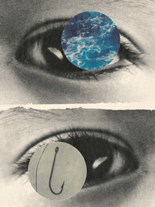
    (Illustration by Vanessa Saba; Source photographs from Getty)

    Rachel Heng’s “A Very Safe Place” is a timely story. Set in Singapore, it confronts the complicated situation of immigration; Its motivations, what constitutes doing the right thing, and the threat of punishment. It also is about a child coming to see the world for what it is, and how disappointing and confusing that can be. All of these are themes and ideas that I applaud in a story – especially one that aims to be as realistic as possible. There is no happy ending here, or nice bow that will wrap everything together. Though sober and stark in its writing, it’s an honesty that is needed when speaking on this subject.

    The story left me feeling melancholic, like there was a dark cloud hanging over all of it. Another way to describe it, is that this story is colored in black in white. Not in a moralistic simplicity, but more for the starkness and complexity of these issues presented. (Like how a black and white movie seems more realistic than color.) The good father who has to make a difficult decision for the safety of his family, a mother whose rigidness keeps her family protected, an immigrant striving for a better life, and a boy slowly coming to understand that the world is filled with complications that aren’t easy to square.

    But, unfortunately, that melancholic started to veer into joylessness as the story neared its end, which made this average length story feel like a trudge. My mind did wander and wonder when this was going to wrap up? That was due to the story playing at one dramatic note of seriousness, with nothing to break the tension, or even to play with fluctuating the tone.

    In the end, “A Very Safe Place” is another good story from Rachel Heng. Where it succeeds most is showing how the boy discovers the larger world he now lives in. Hopefully, this encounter will lead him to a life filled with empathy and compassion, regardless of the consequences.


  • Short Story Review: “Safety” by Joan Silber

    (The short story “Safety” by Joan Silber appeared in the December 8th, 2025 issue of The New Yorker.)

    Illustration by Chris W. Kim

    You know, every “time” is a “historic time” but some are more historic than others. I will agree that we are in the middle of one of those historic times, and if I am lucky enough to have grandkids, then I imagine they will ask me “WTF was everyone thinking, grandpa?” The good news is that over the past three or four months, I have started to see works of art in different media start to tackle the events of deportation, disappearing, and what effect these policies will have on America. I am going to throw Joan Silber’s “Safety” in with all of these works, though uneven, I applaud what this story attempted.

    Overly Simplified Synopsis: Two girls become friends growing up in New York, one Muslim the other Jewish, and both decedents of people who immigrated to the US to escape dictators. They go their separate ways in life and reconnect in New York, where the Muslim friend now has a child and a partner who is a comedian. When the comedian is on his way home from a gig, he is disappeared by the Administration.

    There is an ease to this story, and a simple directness to the writing. What it does well is create a picture of the modern melting pot that America is – people of different backgrounds are still coming here, and their children are still connecting with people that are different from them, and finding a commonality in our shared humanity. Silber does well in creating a context for the Muslim family regarding escaping the Nazis, being forced to migrate by Stalin to Uzbekistan, and the trauma of family separation.

    Yet, through it all, I couldn’t shake the feeling that this story was pulling its punches. There is a huge amount of drama here that is being sieved through a philosophical existential filter, but it never seems to amount to an emotional climax. For example, think of how these families lives’ have been influenced by authoritarians – from being pushed out of home nations, to being pushed together in America – and how these families have made new lives for themselves. And when a new Authoritarian pressure is applied, the characters seem more resigned, as if ordained to this fate, rather than free to exist.

    Ultimately, I appreciated this story, and Silber, for taking a swing at an issue that needs to be swung at. “Safety” uncomfortably reminds us that history does repeat itself. That immigration, deportation, and citizenship (both in its legal and the social definition) needs to be discussed and debated again, so we can finally find a way to break this awful cycle.

  • Short Story Review: “Five Bridges” by Colm Tóibín

    (The short story “Five Bridges” by Colm Tóibín appeared in the March 10th, 2025 issue of The New Yorker.)

    Photograph by Todd Hido for The New Yorker

    Sometimes when I start reading a short story, in the back of my mind, I start rooting for it. You know, cheering it on, hoping that the story succeeds. Like wishing that your favorite ballplayer hits a homerun when they’re at the plate. So you see, I found myself really pulling for Colm Tóibín’s “Five Bridges” to do well, and accomplish its goals.

    Here’s an overly simplified synopsis: Paul, an Irish guy who has been living in the United States illegally for over thirty years, has decided to move back to Ireland, but in so doing, that will mean he will have to leave his daughter, whom he fathered with woman he never married. But before he leaves, his daughter wants Paul, the mother and the mother’s husband, to all hike Mount Tam which is outside of San Francisco.

    It all starts well. The first section is about Paul hiking with his daughter, Geraldine, and then she tells him her idea about everyone hiking together to Mount Tam. Then at a very leisurely pace, we learn about the strained relationship Paul has with Geraldine’s mother, Sandra. We learn about Paul’s profession as an unlicensed plumber, his socks filled with cash, and his recovery over his alcoholism. Then the story takes a rather hard right turn with the introduction of Paul’s friend Kirwan, another Irishman, and the semi support group Kirwan creates for other single Irishmen living in the Bay Area. Then the story shifts back to Paul, Geraldine, Sandra and her husband, Stan, as the hike up the mount. I’ll leave it there as to not ruin the ending.

    As you can see, Tóibín layers his story, and generally it all works together smoothly, with the exception of that hard-right turn with Kirwan. Also, several themes play under the surface here; fathers and daughters, blended families, immigration, culture clashes, redemption, penance… And as the story went on, and I got closer and closer to the final page, that’s when I started hoping and rooting for this story to all pull together.

    I was enjoying what I was reading, but I couldn’t shake the feeling that nothing was getting it’s full due time to resolve itself. When I encounter stories that feel like this, it’s hard for me to shake the feeling that the piece needs a larger format (a novel) to explore the characters, motivations and themes. I wouldn’t go as far to say I was disappointed with the story; more like I was pulling for it, and wanted to it work.