Tag: horror

  • Short Story Review: “Family Lore” by Téa Obreht

    (The short story “Family Lore” by Téa Obreht appeared in the November 9th, 2026 issue of The New Yorker.)
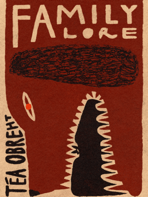
    Illustration by Tabby Booth

    I have been trying to find the source of this quote, and I believe that either Edward Albee or David Mamet said it, but it goes something like this: All modern drama revolves around the idea of deception, or characters hiding the truth from each other. (I do know that characters deceiving each other is like 99% of all the plots for situation comedies.) This dramatic device makes total sense; a character wants something, so they lie to others to achieve their goal. And there is another element, which is the penalty that will occur if the lie or deception is exposed. This is the risk, which frames how powerful the character’s want is, but it also shows what will happen if the lie falls apart, which you know, creates peril and more importantly, drama. It’s a simple device, and in regard to Téa Obreht’s “Family Lore,” a device whose execution in this story was fumbled, leaving the story on flimsy legs.

    “Family Lore” does play a bit like a sit-com. It’s the story of a family returning from the hospital with their new born baby. The husband bumbles his way through issues, trying to solve them as best as he can, all the while trying to keep these issues from his wife. At first, he struggles at finding an inconsequential baby hat that he lost, but then it gets more complicated when he tries to recover a bat, that may have bitten his dog, so he can send it to Animal Protection to test for rabies. See, a rather sit-com like premise, which implies opportunities for complications and comedy. Yet, the husband’s motivations are never solidly concrete in the story. You could make assumptions about his motivation, but as far as I could tell, there was only one line in the third paragraph of the piece; “But his job was to keep the world at bay.” And this line was regarding the husband trying to keep the wife calm when things go bad. Sure, it works as his motivation, but it’s flimsy. I have to say that this is an example of why a writer should “show” and not “tell” the reader. As in, what happens when the wife gets upset? Did it happen in the past, and if so, what was the outcome? How did that outcome affect the husband, let alone the relationship between the two? Obreht does “show” other situations with characters, the neighbors for example, which explain why the husband treats them the way he does. So, I am confused why this fundamental motivation of the story is resigned to just one line.

    This flimsy motivation choice by Obreht does have a ripple effect as the story progresses. As the stakes get raised in the story, and the husband stumbles into more and more lies, I began to question why he was doing this to himself? I understood the lies toward the downstairs neighbor, but why was he lying to Animal Protection, or the upstairs neighbor, or the party goers, and especially his wife. It appeared that if he told the truth to these people, he would have gotten what he wanted easier. It started to build a resentment, and a frustration in me toward the husband. Honestly, if he picked up his phone and told his wife everything, I think it would have solved his problems with a minimum of effort. So, why was he lying?

    It’s as if “Family Lore” was almost there as a story. Which is too bad, because I don’t think The New Yorker publishes very many humorous stories. And it did have all the pieces to be a good one; it was building toward something, I enjoyed how the piece ended, and most importantly, it was funny. It reminds me of another old adage when it comes to a character dealing with a situation that keeps getting more and more out of control; for it all to work, the audience has to understand that the character fully believes that they will still succeed. When you can’t figure out why a character is doing what they’re doing, it’s hard to have confidence that their success is even important.

  • Flash Fiction Review – “Two days after I died” by Justine Sweeney

    (The flash fiction story “Two days after I died” by Justine Sweeney was published on March 19th, 2026 at Milk Candy Review.)

    “Two days after I died” by Justine Sweeney is the type of flash piece that makes me love flash writers as they can be inventive and playful with this form, while at the same time making me ask, in a mischievous way, “What did I just read?”

    In “Two days after I dies” Justine Sweeny gives to us the character of a recently realized ghost. I love that this spirit is frantic and unhinged – tethered to this world, either unable or unwilling to leave it. Sweeny uses effectively simple techniques here; lack of capitalization, run-on sentences, and short words that make a choppy, staccato rhythm to the piece. What the writer creates is a spirit’s frenzied attempt to get all of these words out and tell us this self-perceived vitally important story. There is an anger to this ghost. A viciousness in her as she is annoyed that someone she doesn’t know well would dare post a personal reflection of her passing on social media. There is a hint at humor in the beginning, but as the fury builds, the tone begins to switch to an unhealthy bitterness which is out of proportion to the allegedly aggrieved crime. Take how the ghost lists all the offenses of this woman. Though the ghost sees the offenses as unforgivable transgressions, we start to feel a sense of jealousness in the comparison of their motherly actions. And when the twist arrives at the end, it lands with pity, and a disbelief that one, even in the afterlife, is so wrapped and warped in grievance, lacking the empathy to acknowledge that there is one person they cared about suffering in their mourning. But most haunting is how this ghost seems to lack even the slightest hint of remorse or regret that she is no longer with her children.

    Sweeney’s “Two days after I died” is a very short and compacted work, but it left me with wonderful questions to roll over in my head. Was the woman who posted on social media really affected to the degree that she claimed, or was it as the ghost suspected, a bit of online grief porn? Can one’s anger and bitterness make a person completely blind to their loved ones suffering? Can animosity and hostility follow us into the next world? Clearly, the theme was meant to apply to us in the here and now, but “Two days after I died” is a succinct rumination of the metaphysical possibility that a life lived unwell, will leave you emotionally untethered in spitefulness.

  • Short Story Review: “Something Out of a Horror Movie” by Mario Aliberto III

    (The short story “Something Out of a Horror Movie,” by Mario Aliberto III appeared on February 27th, 2025 in Milk Candy Review.)

    (Image from Milk Candy Review)

    When I was a teenager, and well into my twenties and beyond, I spent hours debating with my friends about the mechanics, tropes, and clichés of horror movies. How most horror movies, more than any other genre of film, are made up of an uncountable number of rip offs and copies of more successful horror movies. For myself, as a person who loves awful movies, bad horror films are an entertaining gift that just keeps on giving.

    So, when I started reading Mario Aliberto III’s “Something Out of a Horror Movie,” I was intrigued as to what he was wanting to accomplish is this flash fiction story. It reads like it was written but someone who loves the awful character clichés of the genre. What I appreciated in this piece was that as I started reading it, I couldn’t put my finger on if this is a story about characters in a horror movie, or if they are characters in “real life” that find themselves in a horror movie situation, or if these are characters that have seen too many horror movies and went to that places because of the situation they were in. By doing that, structuring the story that way, left me feeling off balance which played very well to the theme of the piece, and ultimately the climax of the story.

    But what I enjoyed most was that this story took a stock clichéd character that I have seen in millions of horror movies, and made me think of her differently, and also made me view her actions in a fully well-rounded way for that character. Aliberto does this rather effortlessly, and compactly. The last paragraph is just great.

    I will never look at the Bad Girl trope character the same way again.