Tag: Fiction

  • Short Story Review: “Safety” by Joan Silber

    (The short story “Safety” by Joan Silber appeared in the December 8th, 2025 issue of The New Yorker.)

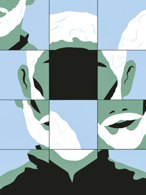
    Illustration by Chris W. Kim

    You know, every “time” is a “historic time” but some are more historic than others. I will agree that we are in the middle of one of those historic times, and if I am lucky enough to have grandkids, then I imagine they will ask me “WTF was everyone thinking, grandpa?” The good news is that over the past three or four months, I have started to see works of art in different media start to tackle the events of deportation, disappearing, and what effect these policies will have on America. I am going to throw Joan Silber’s “Safety” in with all of these works, though uneven, I applaud what this story attempted.

    Overly Simplified Synopsis: Two girls become friends growing up in New York, one Muslim the other Jewish, and both decedents of people who immigrated to the US to escape dictators. They go their separate ways in life and reconnect in New York, where the Muslim friend now has a child and a partner who is a comedian. When the comedian is on his way home from a gig, he is disappeared by the Administration.

    There is an ease to this story, and a simple directness to the writing. What it does well is create a picture of the modern melting pot that America is – people of different backgrounds are still coming here, and their children are still connecting with people that are different from them, and finding a commonality in our shared humanity. Silber does well in creating a context for the Muslim family regarding escaping the Nazis, being forced to migrate by Stalin to Uzbekistan, and the trauma of family separation.

    Yet, through it all, I couldn’t shake the feeling that this story was pulling its punches. There is a huge amount of drama here that is being sieved through a philosophical existential filter, but it never seems to amount to an emotional climax. For example, think of how these families lives’ have been influenced by authoritarians – from being pushed out of home nations, to being pushed together in America – and how these families have made new lives for themselves. And when a new Authoritarian pressure is applied, the characters seem more resigned, as if ordained to this fate, rather than free to exist.

    Ultimately, I appreciated this story, and Silber, for taking a swing at an issue that needs to be swung at. “Safety” uncomfortably reminds us that history does repeat itself. That immigration, deportation, and citizenship (both in its legal and the social definition) needs to be discussed and debated again, so we can finally find a way to break this awful cycle.

  • Short Story Review: “Mother of Men” by Lauren Groff

    (The short story “Mother of Men” by Lauren Groff appeared in the November 10th, 2025 issue of The New Yorker.)

    Photograph by Bryan Schutmaat

    “Mother of Men” by Lauren Groff is a good story, except for one thing. And I’ll get to that.

    But before I get to that, this story made me think about the world my mother lived in. She was married with three sons, and though she told us she loved it, she did have to deal with three stinky boys, who became men, and all the baggage that came with it. Later in life, when me and my brothers got married and had our own families, did it start to dawn on us how much of her life was confined with masculine demands. In that context, much of what is expressed in this story by the narrator rang true to me; that men are always in her house, how her boys were now men, and the need for her home to be a safe place.

    When the stalker is added to the story, and thus kicking off the plot, the menace that this man places on the narrator, is not only an immediate threat to her, but also to her home, and these men in her life. And this stalker is truly a threat, because he does have a gun. This weapon also functions as a reminder that violence and men are never too far apart from each other. Her husband has a baseball bat, her sons offer their own cocky protection to their mother, and the narrator even tries to enlist the workers from her home renovation for additional security. All of this raised interesting questions of violence and safety, of masculine and feminine roles, how a mother goes from protector of her sons, to needing protection from them. Even the title of story, which is also the title Catholics use in reference to Mary mother of Jesus, wasn’t lost on me, and added another layer to the piece. Great stuff.

    And then the climax happened. The stalker enters the home at night, the narrator is unable to take action, so her son asks the stalker to leave, which the stalker does. And it felt completely incongruent to everything that had come before in the story. This climax broke Chekhov’s Gun Rule, which means if you introduce a gun in the story, you have to fire it at the end. There was an expectation of violence, threat, even menace in this story, and to not deliver a resolution to that expectation left the ending of the story feeling hollow. And I did spend time thinking about this climax and the choices that were made, but I kept coming back to the same conclusion – the gun needed to be fired.

  • Short Story Review: “Unreasonable” by Rivka Galchen

    (The short story “Unreasonable” by Rivka Galchen appeared in the September 29th, 2025 issue of The New Yorker.)

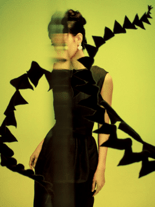
    Photo illustration by Stephen Doyle

    A couple of years ago, my daughter got invited to a classmate’s birthday party, and as good parents, we attended with her. As the wife and I mingled with the other parents hiding on the periphery of the party, we struck up a conversation with a father who was a scientific researcher on fruit flies. It took a few minutes to convince him that we were actually interested in what he did, because as he put it, “No one thinks fruit flies are interesting.” But once he started talking about his research, he got excited and animated about the topic. It was a great conversation, and it reminded me that if someone is passionate about what they do, when they talk about it, it can be very interesting.

    It was this conversation that I kept thinking about as I read Rivka Galchen’s “Unreasonable.” The narrator/protagonist of this story is a bee researcher at a university, and in essence, she’s telling us about her life and about bees. These two tangents work exceedingly well at complementing each other as the narrator’s tone is measured, funny, scientific, and relatable. I was struck at how seamless the story went from one area to the other, exemplifying how much the research and her life were intertwined, and impossible to separate from each other. But what truly reminded me about the conversation at the birthday party was how excited and passionate the narrator was about bees. Maybe it wasn’t a volcano of exuberance, but it was an intense interest and knowledgebase, just like that fruit fly researcher. Their excitement, made you excited. I don’t know if Galchen is a bee enthusiast or not, but if she isn’t, then lots of respect to her for creating this character.

    The other aspect of “Unreasonable” that I enjoyed was how the narrator, perhaps a bit subconsciously, viewed her life through the lens of bee behavior, and the study of bees. It’s pointed out in the story that male bees only have one function in the hive, fertilization, and that they don’t do anything else. I couldn’t help noticing that this fact of male bees is used almost like a prism towards the other male characters, exemplifying how some of them shirk responsibility, are adolescent, or are oblivious to the world around them. Then there is the use of tracking bees in the narrator’s research, and also how tracking is used in her personal life; how she tracks one of her daughter’s movements on an iPad, and how the other daughter used a bee tracking device to follow an ex-boyfriend. There are other examples in the story, but I think you get the point. It almost felt like a fun parlor game connecting the two worlds together.

    I liked “Unreasonable” and enjoyed how this was the type of story that kept rolling and moving, and left me wondering where it was going, but was happy to have that feeling of unexpected surprise. This was a fun place to inhabit with the narrator, and experience her world, because it’s exciting to be around a person who is excited about what excites them, and let’s it swarm into their life.

  • Short Story Review: “The Pool” by T. Coraghessan Boyle

    (The short story “The Pool” by T. Coraghessan Boyle appeared in the September 22nd, 2025 issue of The New Yorker.)

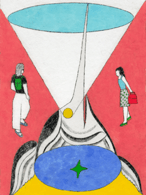
    Illustration by Leanne Shapton

    Here’s an old saying that will live forever; Imitation is the sincerest form of flattery. And when I hear this line, I contemplate if other words can also show sincere flattery, like – Impression, Takeoff, Parody, Sendup, Reproduction, Inspiration, or Synthesis. While reading T. Coraghessan Boyle’s “The Pool” I began to wonder how much of a debt this story owes to John Cheever’s “The Swimmer,” and should that be interpreted as a form of flattery?

    Now, I’m not the one who originally brought up Cheever. The story did it in the seventh paragraph. Also, “The Pool” is a story that is being published in The New Yorker, and that story references one of Cheever’s most famous stories, “The Swimmer” which was also published in The New Yorker. As such, the preponderance of the evidence leads me to believe that “The Swimmer” is, if nothing else, an influence on this story.

    “The Pool” is about a pool which is a part of a house that is recently purchased by the narrator/protagonist and his wife. They have two kids, and she is pregnant with their third, and final child. From the beginning of the story, there is a concern that a child may drown in the pool, and this foreshadowing comes to fruition when the narrator’s son falls into the pool at their house warming party. Thankfully the child is saved by a family friend, Malcolm, who is helping the narrator to paint the house. This near-death moment is the first of three that happen in the story; the other being a tree branch falling on the narrator’s wife, and the ending with the narrator jumping off the roof into the pool. Nothing bad happens to them, they stay lucky and safe. The same cannot be said for others in the story. Malcolm’s marriage falls apart, a baby opossum falls into the pool, and though rescued with attempts to nurse it back to health, the animal dies. In fact, there is dangerous wildlife just beyond the backyard fence, which the narrator encounters, and chooses not to tell his wife or family about. The narrator seems most concerned about drinking and staying high around his pool as the summer wains on with an almost never-ending round of pool parties at the home.

    And that brings me to my biggest rub; what to make of the narrator/protagonist? I wouldn’t go full blown and call him a narcissist, but he is rather self-absorbed. His children get very few mentions, other than saying they moved to find better schools, and that his wife’s birth control failed three times. His relationship with his pregnant wife seems to be fine, though he doesn’t show or say anything affectionate toward her even in her grand expecting state. Even the birth of their third child feels more like a footnote so the narrator can return home and continue sitting around the pool drinking with Malcolm. As the story progresses, the narrator seems to devolve into a more adolescent state. Having fun at the pool seems to be his only concern. It doesn’t lend itself to a satisfying character arc, because if this was a hero’s journey, then the journey never got started.

    Yet, I kept finding myself being pulled back to “The Swimmer” reference at the start of the story. Is “The Pool” a comment on current life in the suburbs? Is it a comment on men and their need for leisure? Or is it talking about men who fail up in life? Or is this about the aspirational attainment of “the American Dream” and how it can insulate you from the harsh realities of our modern world? I don’t know… I’m just not sure.

    I do want to add that I enjoy T. Coraghessan Boyle’s writing. Reading this story, the prose was compelling, and even urgent in places. There are moments of unease, and tension so the story, and I would say intentionally, feels as if it is settled on uneven ground. That things could shift at any moment. There are no clear lines here, but curves that the tone and themes progress on. It doesn’t follow a pattern, which is refreshing and should be acknowledged.

    I’m glad I read “The Pool” and for making me go look up “The Swimmer” as well. I can’t shake the feeling that “The Pool” is inspired and influenced by “The Swimmer” but still not sure what to make of it. I do recommend that you read it. If for no other reason than to ask, “What do you think it was about?”

  • My Review of Gabe Montesanti’s “The Signs” in Split Lip Magazine

    Today, Split Lip Magazine published my review of Gabe Montesanti’s prose poetry piece “The Signs.”

    If you have a moment, please check out my review, but if you REALLY have a moment, please read Gabe Montesanti’s very unique poem, which Okay Donkey published back in April of this year.

    Also, I would like to thank everyone over at Split Lip for their help and support, especially Daniel, who guided and edited my piece. It was a lotta fun, and enjoyed the experience.