Tag: Emotions

  • Short Story Review: “Hi Daddy” by Matthew Klam

    (The short story “Hi Daddy” by Matthew Klam appeared in the October 14th, 2024 issue of The New Yorker.)
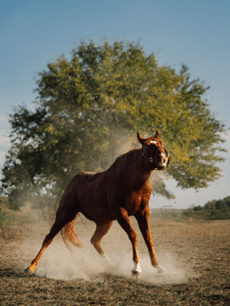
    Photograph by Ryan Lowry for The New Yorker

    As I get older, I have this dualistic thought in my head when I think of my parents; How much I am like them, and how much I am not like them. This dualism can cause great joy, and unbelievable anxiety in me. I also know as a middle-aged man, that the more things change, the more they stay the same. With Matthew Klam’s story “Hi Daddy,” a well-intended but uneven work, he attempts to address these issues.

    Here’s my way to simple synopsis: Middle aged man says goodbye to his teenage daughter as she goes off to Europe for the summer before she starts college, and then he visits his elderly parents, realizing that he is more like his father than he wants to admit.

    Emotionally, I dug this story, and identified strongly with the narrator. There was an honesty in the narrator, that sometimes got very close to self-pity and whining, but Klam was able to pull it back in time. The narrator, in his family, has the role of primary care giver, as his wife has the job that earns the majority of their living. This role has left the narrator feeling taken for granted and left out, though his wife does point out that he is the cause of this situation, as he can be emotionally unavailable, especially to their daughter. Part of his issue stems from having trouble dealing with his daughter leaving home, and the changes that it will bring. When he visits his parents, his father has fallen and has dementia. The dementia means the father no longer recognizes the son, and the fall means that the once stoic and distant father has become feeble and dependent. Again, the theme of change, and the act of dealing with change, gives the story a weight here, and the narrator’s inability to know how to deal with these situations and emotions has a melancholic honesty to it.

    Yet, I had issues with this story, and they were all technical storytelling issues. When I finished the piece, I was left feeling unsatisfied, and that was due to none of the story threads felt wrapped up. Many emotional tangents are cast about in this story, but they don’t come back or lead to a resolution. The narrator says that he doesn’t like his parents, but the issues are with his father, so why is the mother put in the same bucket with the father? When the narrator realizes that he is becoming like his father, will that influence future actions of the narrator?

    That last one was the kicker for me, for that was the driver for the unsatisfying feeling the story created in me.

    If this is a normal “Hero’s Journey” story, then the narrator’s realization that he is like his father would then influence an action in the climax of the story, therefore allowing the hero to defeat the obstacle and view the world in a different way. The best that I can tell, the hero’s obstacle is himself, the climax has to do with the horse getting free (horse also metaphor for father/son,) yet the narrator’s actions in dealing with the horse are not influenced by his realization. If this is a normal “Rising Action, Climax, Resolution” story, then I’m not sure what to make out of the last two sections as a resolution; the thoughts the narrator has about his daughter’s choice in boyfriends and her actions towards them, and final section which is a “Dead Chick in the Basket*” cliché. That left me to believe that this whole exercise was just a meditation on the narrator dealing with a rough two days, and the narrator is the same person at the start of the story as he is at the end of the story. And if that is true, the narrator doesn’t change, then why are we being told this story?

    I will say this, “Hi Daddy” has some very fine points, and some crisp, honesty imagery and writing. Matthew Klam is writing about a character who is flawed, which is just ripe for storytelling. And it almost gets there. He just didn’t stick the landing.

    *  “Dead Chick in the Basket” refers to a writing device where the final paragraph of a short story contains new information about a character which is meant to make the reader view the actions, statements, or feelings of that character in a different light. The first known use of this device was in J.D. Salinger’s short story “Just Before the War with the Eskimos.”

  • Short Story Review: “Smoke” by Nicola Winstanley

    (The short story “Smoke” is part of Nicola Winstanley’s short story collection, which is entitled SMOKE.)

    I took a writing class, long time ago, and the professor pronounced to us on day one, that “Your characters are your babies. And if you want to be a good writer, you have to make your babies suffer.” He was a bit dramatic, but academically, his was correct; characters have to be knocked down to make their eventually rise have any dramatic or cathartic weight. This is not a revolutionary idea, as its just essential to storytelling.

    Nicola Winstanley isn’t afraid to make her characters suffer. In her title story, “Smoke,” she allows the nine-year old Amanda to suffer, but also shows us the suffering of her family, and how each of their own pain affects and inflicts on the others. As the story begins, children are being called home for supper by their mothers, but Amanda’s mother has recently passed away, so no one is calling for her. At home, her older sister Judy, dealing with the loss in her own detached way, instructs Amanda to make herself a dinner of toast, as that is all the food in the house that their father has left for them. They tell themselves that their father is still at work and will be home soon. Eventually, he does come home, but its late, the children should be in bed, and he seems aloof to how to take care of two daughters, let alone himself. What follows is a story about a family dealing with grief, but the focus is on Amanda and her wrestling and discovery of the emotions she is experiencing – as for a nine-year-old, these emotions are just beyond her ability to articulate and understand them, but her feelings are strong enough to engage her to action.

    At times I felt that this story was brutal in its honesty. Amanda at first believes that her mother has just gone away, as if there was a chance for her return, but Amanda’s actions betray this belief of hers. Winstanley marvelously illustrates how Amanda does everything in her power to keep the loneness and the emptiness within her at bay, but Amanda is a child, and handles these complex feelings as a child would – playing with a friend, eating sweets, hiding from her sister, and waiting for her father to return. All for not, as slowly it dawns on Amanda that she is alone.

    The other touch that I enjoyed with this story was how the other two family members dealt with their own grief. Judy’s reaction is to leave this home, and stay with a friend’s family. Maybe Judy is saving herself, finding a way to survive this situation, but to do that she has to abandon her sister. And then there is their father, who’s way of coping is to not be in the home, which clearly no longer feels like a home. Though the story never goes into detail what is keeping their father away, it’s a question that I never felt needs to be answer. No, he is looking out for himself as well, because Winstanley drops an illuminating point, by observing that while the girls are going without, he has time to get new glasses for himself.  From this point, Amanda begins to spiral down, and it is painful to watch. She doesn’t have clean or good fitting clothes. There isn’t enough to eat, and she goes to school hungry, and without a lunch. She finds some sympathy with other children, but she also finds unwanted attention from the local teenagers.

    And here the story takes a turn, in a direction I wasn’t fully expecting; Amanda tries to find her way out of where she’s at. Maybe she doesn’t fully understand why she’s doing it, but we know. The need to sleep in the same bed with her father. The attempts to clean their home. Amanda tries to eat better, and be better. Amanda doesn’t give up, she tries, she fights for security, and to keep the loneness away.

    With the end of the story, and the reconciliation between Amanda and her father, I felt that these characters were now seeing each other, acknowledging that they need to and can do better. But… but there is a melancholy to this ending. The damage has been done. The trauma has been created. These few days of this story might be some of the most impactful days of her life. I felt that at the conclusion of this story, I knew Amanda would be okay, but it would be a journey where she would have to deal with her feelings of abandonment, neglect, food anxiety, authority figures, and shame. There was such a hopeful melancholy with this story, that I just felt crushed by a feeling of compassion for these characters.

    It wasn’t the reaction I was expecting, but as the days went on after reading this story, I kept thinking about Amanda, and how this story very quietly illuminated the exact moment in this person’s life where they stopped seeing the world as a child does, and started taking the first steps toward understanding the world of adulthood.

    Nicola Winstanley made her baby suffer. Yet, Amanda came out on the other end. It was hard at times reading certain passages, and not because something shockingly brutal happened. No, difficult to read because I know that those little indignities that happen in childhood, those are the deepest cuts that take a lifetime to deal with. Maybe I would prefer to be the kid eating sweets, trying to ignore that pain deep down. Nicola Winstanley had the courage to confront that pain, and let Amanda start her healing.

  • Road Trip Thoughts, Part Two (Unedited)

    When I woke up Saturday morning, the first thing I did was text the wife to see how she was doing. She was happy to report that the medication had started to take effect, and she was feeling much better. Maybe she could have made the trip, but out of caution, I knew we had made the right call to have her stay home.

    I cleaned up and went down to the lobby for my complementary free breakfast. To my surprise, at 8am, the lobby was packed, and not to be rude, packed with retirees. There must have been some gathering happening that weekend because a good number of the men all had the same t-shirt on, though there weren’t any words identifying what organization they belonged to.

    Seeing these older people, I wondered what type of retired guy I will be like. Having witnessed my grandfather and father’s retirements, what I observed is that they weren’t very social. They had hobbies and read all the time, but neither of them belonged to some “group” that did things. They were solitary men, and as I thought about it, that seemed correct for me as well. But maybe I would travel. Go from one budget hotel to another; seeing America in a very comfortable and affordable way. Staying right off the highway, and not venturing into town.

    I checked out, and fueled up the car. I sat in the parking lot and called the wife. She confirmed that she was feeling better, and we were both excited about having the kid back. We didn’t talk for too long; the wife still needed to rest, and I was excited to pick up the kid.

    I was only an hour and a half from the camp, and the drive was a peaceful, leisurely one that took me up into the Appalachian Mountains. I was anxious to see my daughter, yet there was this feeling that kept creeping over me – a feeling that I wasn’t living up to some standard that I had in my head of the type of father I need to be. It was failure. I felt like I have been failing as a dad, not giving my daughter what she needs to be a strong woman in this world. I have no idea where this thought was coming from, why at that moment of driving to pick her up that I felt that I wasn’t doing my job as a dad.

    Too much time alone with my thoughts can be dangerous. Honestly, I couldn’t remember when the last time I had almost two days alone to myself. Without someone to talk to, I descended into my thoughts, and I’m not very kind to myself. I have been working on that; being kinder to myself. Telling myself that these negative thoughts aren’t very helpful. I will be kinder to myself, and not so critical. Not that I do that, but I have been thinking about making this change.

    The camp is off a little single lane road. There was a check point where I had to show my ID, verifying that I was the kid’s father. But I was fifteen minutes early, so they had me pull into a small parking lot to wait my turn. Now, this was the worst part – so close to getting the kid. I was ready for her to be dirty, and smell bad because it was an outdoor camp, and she was free to be dirty and smelly, and have the best time as possible. I was sure her hair would be wild and tangled, and she would be taller, and tan, and happier and more confident than she’s been in a long time. I was getting excited about how great of a time she had had.

    Then we were given the all clear, and it was time for us parents to get our kids. What that really meant was that we all got our cars to line up and slowly drive into camp. And the excitement kept building in me.

    And this was another moment in my life where I was taken aback by my emotions. I thought I knew what I would feel, but what I felt was stronger and more sweeping than I knew I had in me. I was going to burst – bust in tears, laughter, scream – something was going to give way. I was barely holding on, only slightly in control of my emotions. The last time I felt like this was when I found out about my mother’s cancer diagnosis – and I was angry, and depressed, forlorn, and hopeless – and at any whim, I was overcome and I wasn’t able to control myself. And I just felt, and it came pouring out of me, just a river (a flood) of emotions and feeling – a raw live wire. At least this time, sitting in my car, waiting my turn to get my daughter, it was joy happiness and love that were bursting to come out.

    See, you’re not supposed to get out of your car when you get your kid from this camp. Pick up there is like an assembly line, which makes sense. They greet you at the first stop, then you get your kids trunk at the next stop, and the final stop is that you kid jumps into your car, and then you are on your way. Hence why you stay in your car.

    When I got to the “get you kid” stop, I hopped out of my car, and was quickly yelled at by the councilors to get back in. Oops. The kid jumped into the car and asked, “Where’s the dog?” I didn’t get a “Hi, Dad” or nothing. She didn’t even ask for her mother. So, the dog was the big winner. Anyway, I enplaned to the kid that mom was sick, and I left the dog with her. The kid said I could have still brought the dog.

    I drove out of camp, but first I pulled back into the waiting parking lot. I got out of the car, and told the kid to do the same, because I was hugging my daughter, damn it! I was going to hug the stinky, wild haired, mosquito bitten, summer tanned kid that I love more than love itself. I just wanted to hug her. “I missed you,” I said to her, with a catch in my throat.

    “I love you, dad” She said back. And then added, “Are we on a father/daughter adventure?”

    “Yes, we are.” My heart exploded a little, for I was in this moment. Keenly aware that this was a memory, an experience, I was creating; one that I would think back on, hold on to, remind myself of when life gets hard. A new core memory for me.

  • The Feels Rollercoaster

    The last couple of years have been a rough go for most of us. I’m not taking a huge leap with that idea, I know. Covid threw everyone for a loop, changed the ways of the world, brought up many issues people had to deal with, and I will also say that on the whole, we are all living in a Post-Covid world now.

    For me, this dark period of life started in 2018 with my mother’s death. She felt a lump in her throat in July, and passed away in October. Three months isn’t necessarily a short period of time, but it still feels like it all happened in the blink of an eye. I’m still dealing with her passing, and probably will forever, but I do know that I am in a better place about it.

    There are many things that can be said about losing a parent, and have been said many times over and over. What I found was that nothing brought me joy or happiness. I was sad all of the time. Not depressed, or withdrawn – just sad. And this sadness was always just below the surface, and if I felt anything too much – laughed too hard, or lost myself in a movie or a song – then I would start crying. And I would allow it to happen, and it felt cathartic, but it also made me feel like I was unhinged, and not in control. I knew I needed to mourn my mother, but I also needed to go to work, and take care of my kid, and that was important too.

    When Covid hit, I still wasn’t in a good place, but I was functional. It was a little strange to be isolated from everyone, but our little family unit clung together. I found that my marriage actually got stronger, and I enjoyed being with my wife all the time. And getting to spend so much time with my kid – playing and teaching her how to read – is a treasured gift that I am so fortunate I was able to take part in. Not that we all didn’t have moments where we needed our space, or got on each other’s nerves; we are human.

    And as 2023 started, I started feeling good again. And I started acknowledging that I had changed. I’m not the same person that I was in 2018. It was tough, but I had to admit that I am no longer a theatre artist or a puppeteer. That was a tough one, as that is how I had thought of myself since 2000, all the way back in college. For the last five years, I hadn’t done a show, and I didn’t have a desire to go back. Same thing with my career in arts management. Though I know I don’t want to go back to it, I also know that I do have some anger with the way I was treated in my last two jobs, and I need to take responsibility for the way I behaved as well. That’s an issue I am still working on.

    What I have changed into is a stay at home dad; that’s my role in the family. It took me a bit of time to come around to it. There is still a pull in me to go get a job, as it is stuck in my head that the only “real” way to contribute to my family is by bringing in money. There is a good chance that I will do that, or need to do that in the near future, but as of now – I got a kid, a home, and a financial future that I am responsible for.

    But I still have to do something creative, which is what you are seeing/reading right now. I have always written something – in a journal since high school, plays, an article for a rock zine, college lit journal, and several on and off blogs. There was a five-year period after high school when I tried my hand at getting published, but other that a handwritten from an editor at STORY Magazine telling me to “keep at it, don’t get discouraged,” nothing ever came of it. This blog that you are reading now, was started back in 2017, back at the tail end of my performing days, so writing has always been hanging around in my life. Sure, in the middle of the Pandemic, I had this crazy notion that I was going to “earn money” through writing… And I have re-assessed this idea. If it happens – great! But I am not counting on it. I’m writing because it makes me feel good, gives me a purpose, and is something to work at that is for me. And right now, that’s what I need most in my life.

    Like I said, with all of these changes, I started feeling good about myself, my place in the world. I started feeling grateful for the like I share with my wife, and kid, my family and my friends. I have a good life – filled my struggles – but it is a good life that I am proud of.

    And then I saw a picture. It was a simple, picture of seven people standing in front of a theatre upstate. One of the people in the picture was a friend of mine, who got tagged in the shot, and it was from an organization that he was working for this summer developing a new theatre piece that involved mime and physical theatre – all the stuff I used to do.

    And that picture made me feel like shit. I was shocked at how awful I felt by looking at it. I wasn’t upset with my friend, nor was I jealous of what he was doing, as he’s been taking part in camp, workshops, and art commune things like this since I met him. I felt like shit looking at that picture because the thought that crept into my head was, “That could have been you if you didn’t quit.” I couldn’t shake the feeling that I had given up on myself, and that nothing mattered.

    I feel that I have a normal level of anxiety and self-doubt. Normal level meaning that I have to work to overcome my anxiety and self-doubt, but it is never so great to keep me from getting out of bed in the morning, or to stop me from trying. But this feeling was more like I had wasted my life – that I could have been doing the cool stuff, creating works of art. That I was just one step away from it, and I was the loser who quit.

    And it was like all the progress that I had made over the past year – working through my mom’s passing, my new role in my family, leaving my career, and working on a new form of expression – was meaningless. It had the added effect of making me feel totally alone and isolated. One picture triggered all of that in me.

    You have to make a choice in a moment like that, and I did what any healthy, well balanced person does – I ate potato chips on the couch while playing video games trying very hard to act like I didn’t feel what I felt. Because I felt ashamed at who I am, and for trying to grow into something else.

    But it passed – all those feels. It passed because I talked to my wife about it. It passed because I took my kid to the community pool on a hot Summer day in Harlem, and we swam and talked about music and going away to camp. It passed because I talked to my partner about it, and it passed because I spent time with my daughter – the person I am trying to better myself for.

    It passed but it still lingers in my mind. It’s there because I still need to take the time and mourn the passing of who I used to be. That’s not to say that I won’t find my way back to a theatre, but if I do return, I won’t be the same person doing it for that old reason. It lingers because I am human, and I will always wonder to some degree if I made the right choice. I wish I was so completely confidant in my decisions that I never look back. That’s not me, and I know that about myself.

    I know a few more things about myself now, that I didn’t know awhile ago. It’s progress. I am happier, and that is a win.

  • After Effects of a Vacation

    I read an article yesterday that most people are happier leading up to their vacation, than actually on their vacation. I took a second to think about that, and I knew that this was true. Yes, the best part of a vacation is counting down the days. Once you get where you are going, then everything goes sideways.

    This year, we talked to kid about this. How, the one of the best parts of being on vacation is when things do go wrong, because that is when you make new discoveries. I know that isn’t 100% true, but I wanted to plant the idea in her head that when things go wrong, it becomes an opportunity to try new and different things. I think it sort of worked. There wasn’t too much complaining, but the trade-off was that she wanted to spend a large amount of time on the family iPad.

    Oh well…

    But we did experience something new with the kid this year when we came home from vacation; she was a little depressed. The kid is seven now, and not little anymore, both physically and emotionally. We all have known that feeling of coming home from a vacation; if you had a good time, then there is that feeling of letdown; a little sadness of having to come home and go back to the old routine. That’s normal.

    This year was the first time that the kid experienced that. And she didn’t know what to do with these feelings. She was sad, sullen, and even had a little bit of a breakdown, and cried in her room for a bit. The wife and I talked, and made sure that we were on the same page on how to deal with this. The most important thing was not to make her feel ashamed for feeling sad. We let her tell us in her own way what was wrong, and let her just experience feeling bad. Then when she calmed down, we started talking about the fun we had, the memories we created, and what we should do with the rest of our summer.

    I know we can’t stop her from feeling bad, or sad, or experiencing emotions that are hard to put your finger on. But we can help her understand that having strong feelings is normal, and can be a good thing. And that there are constructive ways of dealing with them.