Tag: book-reviews

  • Short Story Review: “Light Secrets” by Joseph O’Neill

    (The short story “Light Secrets” by Joseph O’Neill appeared in the January 26th, 2026 issue of The New Yorker.)

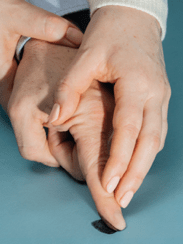
    Photograph by Eric Helgas for The New Yorker

    Got another “Can’t Put My Finger on It” short story. (It’s doubly funny because hands come into play with the work.) I have come around, and I will say that I do like Joseph O’Neill’s “Light Secrets.” And I did come around to it, because when I finished reading it, I wasn’t sure exactly what I had read. “What is this?” I said out loud in my car. See, I was in the process of moving my car for the street sweeper, but the sweeper hadn’t arrived yet, so I decided that I should read this story. The sweeper never arrived, so as I walked back to my apartment, I contemplated what I had just read. And my opinion began to change.

    Though “Light Secrets” is a contemporary story taking place in New York City, it feels more akin to a late 70’s early 80’s New York – like in a Woody Allen movie. You know, smart professional people in their 40’s with leisure time to lunch, walk the City, attend friendly dinner parties, and enjoy robust social circles. I’m not bringing this up as a criticism of the work, more to establish the setting and mentality of these characters; their lives have a breath and space to them which allows for internal contemplation, and though they all have outside pressures in their lives, none of those pressures are paramount to define their being, but are more like accessories to highlight characterization. For a story like this to work, you have to believe that these characters are the type of people that would take the time to analyze and digest what their friends say and how it may apply to their life, and not just move from moment to moment.

    And with that said, I’m not sure what “Light Secrets” is trying to say, but I liked it. I like the sensibility of it. How the protagonist speaks to us like we’re a friend. I like how things are left undefined, and rough around the edges. How moments seem to have an intersection, but maybe it’s just a coincidence? Does the touching of hands mean anything, or is it just something that happens? Can a lifetime of good deeds be undone by an unconfirmed rumor? Should it? I kept finding myself going back and thinking of the old adage, “If a tree falls in the woods, does it make a sound?” Does a good deed have to be acknowledged for it to have impact and relevance? Is existentialism just dumb luck which we have thought too much about?

    I hate to admit it, but I am a sucker for stories like this – undefined and leading to interpretation. You know, which door has the tiger behind it, and stuff like that. “Light Secrets” is right up my alley, and I think O’Neill did an excellent job of balancing his story, in regard to the information we are given, and the information left out. It’s a well thought through work, and I appreciate that it required me to slow down a step, and just contemplate life for a bit.

  • Best of 2025: Best Post of the Year – Short Story Review: “Door in the Woods” by Chris Scott

    This isn’t so much about the post being the best, but the flash piece being the best of the year. This story resonated with me, and I kept thinking about it as the year went on. It’s hard to pin down, but I loved the ambiguity. Please, if you haven’t, check out this piece.

    Short Story Review: “Door in the Woods” by Chris Scott

    (The flash fiction story “Door in the Woods” by Chris Scott was presented at Okay Donkey on October 3rd, 2025.)

    The “Door in the Woods” by Chris Scott pulls off my favorite story telling trick; It leaves me with more questions than answers, but not in the frustrating “jerk you around” kind’a way. This is a work that straddles realism and surrealism. It is relatable, authentic, but also funny and absurd. In little over 1,100 words, it is a very specific story addressing a rather universal experience most encounter in their relationships.

    The story starts off with a bit of mystery and tension. It isn’t until the third sentence wherein the door is identified. Even in the second paragraph, when more of a description of the door is given, there hangs in the air a feeling that the door is unnatural in origin. Then to add to the tension, it is shared that this couple has been in therapy in an attempt to save their marriage. Once they decide how to pass by/through the door, and do so, the uneasiness of the situation fades, and seems to be setting up a metaphor for the couples’ relationship. But there’s a complications; each person remembers the encounter with the door differently.

    Was this a supernatural encounter? Is this couple like every couple, and having a moment where they remember things differently? Is the door affecting their ability to remember? Or is this misremembering an act of sabotage by one of the partners? These questions hang, and motivate the narrator, who is the husband in the couple. Truth isn’t the goal, when an answer, a conclusion, or closure is what’s needed.

    Scott does an excellent job creating tension, unease, and relatability in this work. The husband’s need and search for an answer from this unusual event underscores his desire to create stability and peace in this rocky marriage. I don’t know a single person who hasn’t agreed to a lie to keep a fight from bubbling up in their relationship. In this story, you can feel the eggshells the husband stands on, and the fear that this could be the event to push this marriage over the edge.

  • Best of 2025: Most Viewed Post – Short Story Review: “Five Bridges” by Colm Tóibín

    This was the big winner of the year. More people than ever came to read my little review which, looking back at it, was neither for nor against the story; just rather there. Anyway, here you go…

    Short Story Review: “Five Bridges” by Colm Tóibín

    (The short story “Five Bridges” by Colm Tóibín appeared in the March 10th, 2025 issue of The New Yorker.)

    Photograph by Todd Hido for The New Yorker

    Sometimes when I start reading a short story, in the back of my mind, I start rooting for it. You know, cheering it on, hoping that the story succeeds. Like wishing that your favorite ballplayer hits a homerun when they’re at the plate. So you see, I found myself really pulling for Colm Tóibín’s “Five Bridges” to do well, and accomplish its goals.

    Here’s an overly simplified synopsis: Paul, an Irish guy who has been living in the United States illegally for over thirty years, has decided to move back to Ireland, but in so doing, that will mean he will have to leave his daughter, whom he fathered with woman he never married. But before he leaves, his daughter wants Paul, the mother and the mother’s husband, to all hike Mount Tam which is outside of San Francisco.

    It all starts well. The first section is about Paul hiking with his daughter, Geraldine, and then she tells him her idea about everyone hiking together to Mount Tam. Then at a very leisurely pace, we learn about the strained relationship Paul has with Geraldine’s mother, Sandra. We learn about Paul’s profession as an unlicensed plumber, his socks filled with cash, and his recovery over his alcoholism. Then the story takes a rather hard right turn with the introduction of Paul’s friend Kirwan, another Irishman, and the semi support group Kirwan creates for other single Irishmen living in the Bay Area. Then the story shifts back to Paul, Geraldine, Sandra and her husband, Stan, as the hike up the mount. I’ll leave it there as to not ruin the ending.

    As you can see, Tóibín layers his story, and generally it all works together smoothly, with the exception of that hard-right turn with Kirwan. Also, several themes play under the surface here; fathers and daughters, blended families, immigration, culture clashes, redemption, penance… And as the story went on, and I got closer and closer to the final page, that’s when I started hoping and rooting for this story to all pull together.

    I was enjoying what I was reading, but I couldn’t shake the feeling that nothing was getting it’s full due time to resolve itself. When I encounter stories that feel like this, it’s hard for me to shake the feeling that the piece needs a larger format (a novel) to explore the characters, motivations and themes. I wouldn’t go as far to say I was disappointed with the story; more like I was pulling for it, and wanted to it work.

  • Personal Review: “First Love” by Gwendoline Riley

    For the life of me, I don’t remember who or what recommended First Love to me. It was on a list of books that I should read, and when I found a copy of it at the Strand, I picked it up without a second thought, nor having any idea what I was about to get myself into. To be honest, I appreciate the joy and excitement that comes from reading a book that I know nothing about, by an author I also know nothing about, because it does afford me the ability to truly experience a work without any preconceived notions. In this situation, I didn’t even read the description on the back of the book.

    First Love isn’t about the “happy” side of love. It’s not about the joy, fulfillment, or really any of the positive side of love. Oh, now and then, that side of love does show up, but on the whole, that’s not what this novel wants to explore. For the protagonist Neve, she shares with us all of people that she first experienced a form of “love” with; her mother, her father, a boyfriend, and her husband. Each relationship is troubled, difficult, in some cases even toxic, and they all overlap on each other, influencing each relationship from actions that happened in the past, and fears of what might happen in the future. For this reason, it is not a traditional novel, and time and events shift – nothing is linear here, but it adds greatly to the theme of these loves bumping and conflicting with each other.

    I found myself thinking about the works of Rachel Cusk and Maggie Nelson as I read this book. Riley’s novel tackles a serious subject, but the narrative never becomes weighed down, as it feels like a conversation. As such, this book was akin to the Outline Trilogy, and the examination in Bluets. It felt very internal, that we were being let in to very personal thoughts and exanimations. I will say that though First Love is a new form novel, like Outline, Riley did have a more traditional climax here, which gave the novel a satisfying conclusion.

    When I read a book like First Love, I am rather envious of writers like Gwendoline Riley, who create drama and self-examining characters, while never making their stories so personal that it becomes dull of whiney. It’s a bit of a magic trick, that is fun to experience. Thank you, to what, or whomever put this book on my reading list.