Category: Art

  • ODDS and ENDS: Walking to Success, Sprung Spring, and Jeans

    ODDS and ENDS: Walking to Success, Sprung Spring, and Jeans

    (Make you come home early…)

    So… I’m back to the gym. I have been off of it since October, and my body is showing it. I have a little belly now, which is really wanting to become a bigger belly. No real surprise, I have let myself go for the past five months. But not any longer. Back to the gym, and my plan is to follow the same pattern as before; a pattern that garnered positive results for me. Thirty minutes a day for five days a week, aiming to get two miles in on the treadmill. And since I am a middle aged man, I know that I have to work my way up to running the whole thirty minutes. So, I do a brisk walk for now, then I will start running for a few minutes, and alternate back to walking. Slowly, I’ll start running more than walking, getting to the point where I walk the first three minutes, jog the next twenty-four, and do a cool down walk of three minutes. I’m on week two of being back to the gym, and I’m still walking for the time being (Next week we start jogging for a few minutes) but is there a way to just walk my way to losing ten pounds? Better yet, is there a way I can just lay on the couch and… well… just lay on the couch because I hate going to the gym, and none of it is fun for me. But… I want to be healthy, so I have to suck it up…

    No one cares about the second Spring day, which is effectively what yesterday was. It was 72 out in the City. It was great out, but it was the second day of Spring and no one cared. See, that first day of Spring, when it gets to the upper 60’s for the first time, everyone and their dog is out. I love how there are the super ambitious people who are dying for Spring and Summer to show up, to the point that they are running around in shorts, t-shirt and sandals as if it was a Summer day. More importantly, that first day of Spring has a feeling of relief and joy that Winter is finally coming to an end; that we have made it through the darkness and better times are ahead. The second Day of Spring is more about people complaining that they out on the wrong coat in the morning.

    There is one sure fire way to acknowledge that I am getting older, and that has to do with decreased amount of time that I wear jeans. There was a time, say from the age of ten to twenty-five, when I would have worn a pair of jeans everyday. Even in Summer, and I used to live in Texas. I lived in jeans. And over this time frame, I did own other pants, like khakis and such, and for shits and giggles I might wear them out, but on the whole, jeans as far as the eye can see. Then I graduated college, and had to go get a job, and the dominance of jeans began to wane in my life, well, at least between the hours of 8am to 6pm, Monday through Friday. Nothing but jeans, in different colors (Blue, dark blue, light blue, and black) and styles (Baggy and Straight) and brands (Levi’s and Old Navy). Now that I am older, sensible slacks seem sensible, and wearing pants that seem appropriate for the season I’m in also is a very logical proposition.

    (P.S. – The AI Image Creator is an RFK Jr. Fan, as It Thinks I Work Out in Jeans)

  • Short Story Review: “Floating” by Souvankham Thammavongsa

    (The short story “Floating” by Souvankham Thammavongsa appeared in the March 30th, 2026 issue of The New Yorker.)

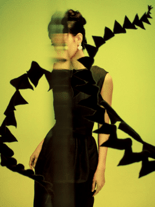
    Illustration by Julien Posture

    Dating sucks. I think there are very few Universal Truths out there, and that’s one of them; Dating, on the whole, is not a pleasurable experience. When dating works, it’s unbelievable, exciting, fulfilling, and all the other words that poets have shared for hundreds of years. But of all the unfun things that dating can conjure up in a person, the not knowing where you stand with the other person is damn near the worst. Souvankham Thammavongsa’s “Floating” tackles that feeling of uncertainty when it comes to meeting someone new, and though it is a charming piece, it does seem to trip over its own feet at the end.

    I say charming because the piece feels as if it is coming from a very authentic place for the protagonist. She is waiting to give a talk in front of people, when a gentleman strikes up a conversation with her. They have a mutual friend, and he suggests that they should all get dinner together. We learn that the protagonist has gotten out of a bad marriage, and has some additional baggage with her family, which lends credence to her hesitation and the guard she puts up with this new man. But soon, he starts to become a bit of mystery. He has to travel for many months, and their possible connection is delayed. Soon, she starts to learn new things about him that don’t totally add up, and bring into question his motivations and intentions. All of this leads the story to create that feeling of instability that only dating, or the hope of dating, can create in a person, which makes all of this relatable.

    I am a fan of stories that are about characters dealing with a situation they’re never fully able to understand. The example I always use is the film “Picnic at Hanging Rock” which is about people dealing with the mystery of what happed at a picnic. “Floating” is that type of story; the protagonist is never able to unravel the mystery of this man, and must come to terms with that. And when I said that the story trips over its own feet, I say that because she doesn’t make a decision at the end of the story. I admit that I might be splitting hairs here, but there is a difference in “floating” because one didn’t make a choice, and “floating” because one is choosing to wait and see. One is passive, the other is active and has agency. Even with an attempted “Dead Chick in the Basket”* ending to conclude the piece, the protagonist chooses to be passive, and though that might be the most realistic decision in this situation, for a short story, it’s not a satisfying narrative conclusion.

    *“Dead Chick in the Basket” refers to a story device wherein the final paragraph of a short story contains new information about a character which is meant to make the reader view the actions, statements, or feelings of that character in a different light. The first known use of this device was in J.D. Salinger’s short story “Just Before the War with the Eskimos.”

  • Earworm Wednesday: You Can’t Fight This Song

    I was about to say that I’m not a big Elton John fan, in the sense that I have never owned one of his albums, but I would never deny that he is one of the giants of rock/pop music. Then I did a search on some of my Spotify playlists, and Nearly everyone has an Elton John song on it.

    Which brings me to “Saturday Night’s Alright For Fighting” which might not be Elton’s best song, but it is a great song. When I first heard it, I thought it was more cheesy than anything else. Yet, this song drills into your head. For me, it’s the guitar hook at the start, and the chorus of “SATURDAY!” being chanted over and over again.

  • ODDS and ENDS: Who Are These People?, I Have Hope Again, and NCAA Men’s Basketball Tournament

    ODDS and ENDS: Who Are These People?, I Have Hope Again, and NCAA Men’s Basketball Tournament

    (Of course you’re not shy…)

    I don’t spend much time on Facebook anymore, ever since my nieces and nephews told me that only old people go on that site. As I am clearly not an old person, I have stayed away from Facebook. Except for the daily check in I do, because I need to check in and see what the other old people are up to. There is a section on Facebook I generally skip over and it’s the “People You May Know” part. Today, I decided to flip though it to see if I might know any of them. And I get what the algorithm is trying to do, which is connect people to me that my other “friends” know, so inherently, most of these people I won’t know. But, going through the list, I started to play the game of “Do I know this person, because they look familiar?” I would see a face, then ask myself, did I take a class with this person in college? Or, did I do a show with this person? Or, did I work with this person? Honestly, I can’t remember anymore, which made me feel old. Which is fitting as only old people go on Facebook.

    Stupid Tottenham Hotspur on Wednesday went on beat Atlético Madrid at Tottenham. Sure, they did lose the on aggregate and are out of the Champions League now, but they won a match at home. And the whole team looked like they gave a shit. Which now means that they went out and gave all of us supports the feeling that hope was alive. That on Sunday when they face off against Nottingham Forest, another team fighting not to be relegated, that we have a Spurs team to root for. A team that doesn’t want to be embarrassed. A team that is willing to dig deep and fight to the final whistle. And just when I had written the club off, now I have to go back to caring again.

    Oh, my bracket is shot to hell. Not awful, but I did make some really bad picks. My problem with making a bracket for the tournament is that I will always pick the underdog. Sometimes it works out really well, making it look like I knew something that everyone else didn’t. Like how I picked TCU, VCU, Texas A&M, Texas, and Saint Louis. Of the first 16 games, I had picked 7 upsets. Maybe not the most logical system for picking winners, but I can’t deny who I am. I like giant killers.

  • Short Story Review: “My Balenciaga” by Han Ong

    (The short story “My Balenciaga” by Han Ong appeared in the March 23rd, 2026 issue of The New Yorker.)

    Photograph by Harold Julian for The New Yorker

    I love the use of McGuffins as a plot device in storytelling. It gives instant motivation, and when used well, can give valued insight into a character’s constitution as they seek the MacGuffin. (In case you aren’t aware what a MacGuffin is, think of the Maltese Falcon, Ark of the Covenant or the Death Star plans.)  I would argue that the Balenciaga dress in Han Ong’s “My Balenciaga” is the same plot device, but used in a dramatic, rather that thriller/action, setting.

    The Balenciaga dress is owned by Lucy’s mother, who is a former fashion model from the Philippians. The mother received the dress many years ago while she was working as an international model, and confusingly, the dress does not contain a Balenciaga label in it, making its authenticity suspect. Lucy and her mother live with Lucy’s aunt on the Upper West Side of Manhattan, and the three lead a pleasant life in the City. The mother still continues to wear the dress on special occasion out, such as going to the Met to watch an opera. After the death of Nora Aunor, a Philippine actress, which affect Lucy’s mother personally, things begin to change in their home. For Lucy, she changes her appearance and tries on the dress, which fits her well, and soon her personal and professional life begin to develop in positive ways. Yet there is still a question over the dress’ origination.

    This is a story that hits all of its marks; it is a very competent work. Yet, I never felt like anything was at stake for these characters, such as there was no emotional peril for Lucy or her mother. I believe that Han Ong was trying to create tension with the dress by playing with the idea of “The Value of Myth.” (You know, like in “The Man Who Shot Liberty Valance” or “Lisa the Iconoclast”) What is more important; the truth about the myth, or the truth the myth creates? No matter which side of this question is answered, I felt that the characters would essentially stay the same. Hence, no tension or peril.

    Perhaps the story was a little too long, spending more time telling rather than showing, so to speak. And, unfortunately, I think you could have taken the aunt out of the story, and it wouldn’t have changed anything. But, I did enjoy the character of Lucy, and found her journey in the story compelling; the search for connection with her mother. Which is why I see the Balenciaga dress as this story’s MacGuffin.